
Splits open at NATO about how to boost presence in Eastern Europe
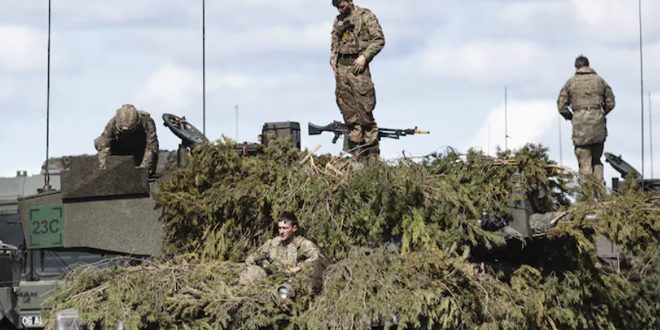
TALLINN, Estonia — Divisions are opening among NATO members about how to boost military deployments in Eastern Europe after Russia’s invasion of Ukraine, amid disagreements about whether the Kremlin’s faltering battlefield effort means it cannot significantly threaten alliance territory.
The debate underlines different assessments of the lessons from nearly three months of war in Ukraine. The Baltic states and Poland are asking for a significantly expanded military presence on their soil and new capabilities such as antiaircraft defense that could make it far harder for Russia to invade. Other policymakers, including from France and Italy, are voicing skepticism that the shambolic Russian invasion force will pose a threat to NATO territory anytime soon.
An initial decision must be made by the end of June, when NATO leaders will meet at a summit in Madrid. At that gathering, they are also expected to give initial approval to Finland and Sweden’s membership applications, assuming Turkey dials back its objections. The expansion would itself significantly increase NATO’s military capability in the eastern part of the alliance.
Eastern European leaders say that opting for a muted response would be a strategic mistake in the same category as the limited Western reaction to Russia’s 2008 invasion of Georgia and its 2014 annexation of Ukraine’s Crimean Peninsula. Those were a signal to Russian President Vladimir Putin that he could get away with attacking his neighbors, Eastern European officials say.
https://www.washingtonpost.com/national-security/2022/05/17/nato-troops-europe-russia-ukraine/