
Mutant mice become ‘super sniffers’
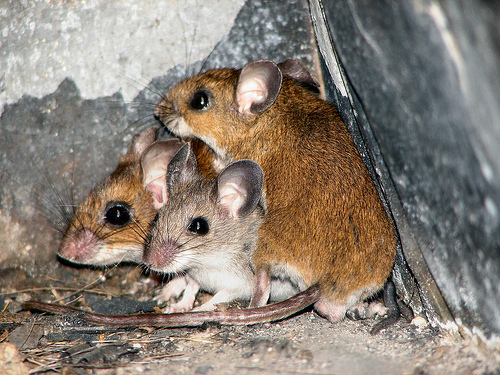
US scientists have mutated mice to turn them into “super sniffers”.
The aim is to create a new generation of rodents that can sniff out drugs or explosives, with the scientists saying the experiment is a proof of concept, according to BBC.
In the future, rats, mice, and perhaps dogs, could be genetically altered to track down certain scents, they report in the scientific journal Cell Reports.
“What we think we can do is make ‘super sniffers’ for particular odours,” said co-researcher Dr Paul Feinstein.
“We trick the animals to want to pay attention to one odour over many others,” added Dr Feinstein, an associate professor at Hunter College, City University of New York.
The scientists used genetic modification to make mice better at detecting certain scents.
The experiments were carried out with two known odours – a chemical that has a sweet smell similar to jasmine and another that smells like peppermint.
the mutated mice could detect lower doses of these odours than non-mutated mic,
The next step is to apply this research to detecting drugs or explosives.
Rats are already being used in Africa to seek out landmines.
The scientists see applications in the future in a number of areas:
Military and defence – for example developing a rat that is better at sniffing out TNT, the main explosive component of landmines
Exploring human smell – mice can now be bred with human receptors for smelling particular odours, giving information about human olfaction. This could be useful in the fragrance and flavour industry, possibly to create new scents
Medical – some illnesses result in a loss of smell, as does ageing. The work could help in this area and possibly as a way to create some sort of “bio-reactor” made up of nerve cells to sniff out human diseases from the chemical signatures they give off in blood or sweat
“We have these millions of years old receptors that are highly tuned to detect chemicals,” Prof Feinstein explained. “We think we can develop them into tools and use them to detect disease.”
H.Z