
Harra bi Isbaou
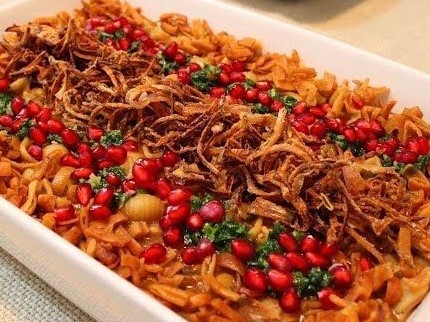
Harra bi isbaou translates as “burnt fingers” and it is originally from Aleppo, Syria.
It is a traditional Syrian recipe made of lentils,dough (small Italian pasta is most commonly used today) and topped with crispy onions and bread.
It is served as an appetizer in family gatherings, but it’s important that the dish be served with all of its garnishes.
They say it’s called harra bi isbaou because the farmers who invented it couldn’t wait for it to cool down to eat it, so they burned their fingers and so as a precaution it is now eaten cold.
Traditionally, a part of the dough is cooked with the lentils while another part is cut into small circles, fried and used as a topping. Nowadays, pita bread is used as a topping instead to save time and fettuccine pasta is used instead of making dough from scratch.
Ingredients:
– 2 cups brown lentils
– Vegetable oil, for deep frying
– 3 large onions, sliced (about 6 cups)
– 2 to 3 pita rounds, cut into ½-inch squares (about 3 cups)
– 1 tablespoon olive oil
– 1 generous cup finely chopped cilantro (from 1 large bunch)
– 6 large cloves garlic, minced
– Salt
– ½ cup small pasta variety (such as elbow macaroni)
– ¼ cup pomegranate juice
– 3 tablespoons lemon juice
For garnish:
– Chopped parsley
– Sumac
– Pomegranate
Preparation:
1- Place the lentils in a large bowl and cover with several inches of water. Let soak for 2 hours.
2- Meanwhile, heat 1 inch of vegetable oil in a deep pot over medium-high heat. Add onions in 1- or 2-cup batches (don’t overcrowd them in the pan) and deep-fry until golden to dark brown, about 5 minutes. Be careful not to burn the onions, or they’ll be bitter. Remove with a slotted spoon to a plate covered in paper towels and let cool uncovered so that they don’t get soggy. Repeat with remaining onions.
3- Add the pieces of pita to the oil, 1 cup at a time, and deep-fry until dark golden brown, about 1 minute. Remove with a slotted spoon to their own plate covered in paper towels and let cool uncovered. Repeat with remaining pita.
4- Heat the olive oil in a medium skillet over medium-high heat. Add the cilantro, half the garlic and a dash of salt and cook, stirring constantly, until the cilantro becomes a deep green and the mixture is fragrant; remove from heat.
5- After the lentils have soaked for 2 hours they should be slightly tender. Drain them and transfer to a heavy-bottomed pot. Cover with 4 cups of water and add 1 teaspoon salt. Bring to a boil, then reduce heat to medium-low and simmer until tender, about 20 minutes. Stir in the pasta and cook until tender, 5 to 8 more minutes.
6- Once the pasta and lentils are tender, add the pomegranate syrup and lemon juice and stir well. After about 5 minutes, stir in the remaining crushed garlic and half of the fried onions. Simmer until the mixture is a thick stew not dry, but not watery either, about 5 more minutes. Season to taste with salt.
7- This dish can be served hot off the stove, at room temperature or cold. Distribute lentils to bowls and divide the garlic-cilantro mixture among them. Sprinkle with fried bread and top with crispy onions, parsley, sumac and pomegranate.
Lara Khouli