
Birds’ eye view is far more colorful than our own
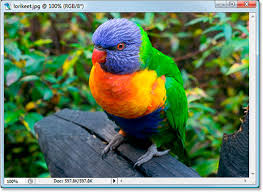
The brilliant colors of birds have inspired poets and nature lovers, but researchers say these existing hues represent only a fraction of what birds are capable of seeing.
The findings based on study of the avian visual system, show that over millions of years of evolution plumage colors went from dull to bright as birds gradually acquired the ability to create newer pigments and structural colors.
“Our clothes were pretty drab before the invention of aniline dyes, but then color became cheap and there was an explosion in the colorful clothes we wear today,” said Richard Prum, and William Robertson Coe Professor. “The same type of thing seemed to have happened with birds.”
Scientists have speculated for years on how birds obtained their colors, but the study was the first to ask what the diversity of bird colors actually look like to birds themselves. Ironically, the answer is that birds see many more colors than humans can, but birds are also capable of seeing many more colors than they have in their plumage. Birds have additional color cones in their retina that are sensitive to ultraviolet range so they see colors that are invisible to humans.
Over time, birds have evolved a dazzling combination of colors that included various melanin pigments, which give human skin its tint, carotenoid pigments, which come from their diets, and structural colors, like the blue eyes of humans. The study shows that the structural colors produce the lion’s share of color diversity to bird feathers, even though they are relatively rare among birds.
Co-author Mary Caswell Stoddard, who began investigating the avian visual system, would like to know why birds have not yet developed the ability to produce, for example, ultraviolet yellow or red colors in their feathers — colors invisible to humans but visible to the birds themselves.
“We don’t know why plumage colors are confined to this subset,” Stoddard said. “The out of gamut colors may be impossible to make with available mechanisms or they may be disadvantageous.”
“That doesn’t mean that birds’ color palette might not eventually evolve to expand into new colors,” Prum said.
“Birds can make only about 26 to 30 percent of the colors they are capable of seeing but they have been working hard over millions of years to overcome these limitations,” Prum said. “The startling thing to realize is that although the colors of birds look so incredibly diverse and beautiful to us, we are color blind compared to birds.
Source :Science daily
N.H.Khider