
A Series of Novels That Were Forbidden: Prison Literature-the Novel ” My Aunt’s House” by Ahmed Khairy al-Omari
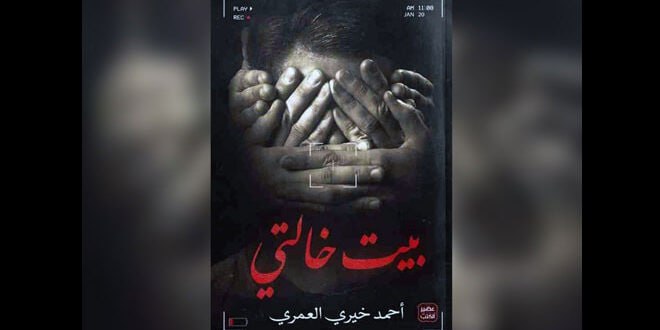
When the Iraqi writer Ahmed Khairy al-Omari watched the details of the tragedy of the Syrian detainees in the prisons of the former regime he found himself in front of a reality that cannot be ignored, so instead of turning the page of pain, he chose to write, converting their suffering into words expressing atrocities that are difficult for the human mind to imagine.
The novel takes place in Berlin, the German capital that became a haven for many Syrian refugees after the revolution, reflecting the challenges they faced in their search for safety.
The characters of this novel are:
– Anas khaznji: a young documentary filmmaker who carries a deep secret related to the suffering of detainees.
– Noor Najjar: Anas’s assistant, who carries with her a painful personal experience, and knows more than necessary. – Yazan al-Ghanem: a psychiatrist who turns from an ordinary human being into a rebel seeking the truth after the suicide of his cousin Anas.
The story begins with Yazan’s feelings of jealousy and annoyance at being compared to Anas, but after Anas ‘ suicide, Yazan finds himself in a whirlpool of questions that lead him to discover terrifying facts about the life of detainees in the prisons of the defunct Syrian regime.
He collaborates with Noor, who revives Anas’s documentary film, which deals with the testimonies of detainees and their painful experiences, highlighting the tortures to which they were subjected.
The novel talks about the Syrian Holocaust, where Anas, through his film, seeks to convey the voices of the victims to the world, to suffer severe psychological trauma because of what he saw.
The story ends with his suicide, which adds additional sadness to the events of the novel.
Yazan discovers during his journey that Noor is not only a friend of Anas but also a victim of abuse, hiding in her heart the effects of gang rape in prisons. The novel is not just a retelling of tragic events, but a call for reflection and Action for change.
Amal Farhat