
Women in Syrian cinema, with an influential presence and heroine in times of war
Since the first film presented by the Syrian film industry the “Innocent Accused” in 1927, women have had an influential presence that was manifested in dozens of films.
The appearance of women in the beginnings of Syrian cinema was limited to paying attention to personal and private issues and trying to defend themselves from being and under the influence of men, or whether she was a good-hearted mother or a beautiful woman, but her femininity was a disaster for her.
This is how she was embodied in the trilogy (Men Under the Sun), produced by the General Film Organization and directed by Nabil Al-Maleh, Marwan Al-Moadhen and Muhammad Shaheen. The trilogy focused on the concepts of masculinity.
Several years later, director Ghassan Shmait portrayed the woman through his movie (Something Burns) with two contradictory faces, as the giving and dedicated to humanity character in preserving her family.
Muhammad Shaheen did not go out in his movie (Ah Ya Bahr) 1994 from this framework and shortened her role to a witness who realizes intuition is pure and pure things.
Director Samir Zikra presented many feature films and documentaries in which he portrayed women. In his documentary film (Talks about Them), he dealt with the situation of women in Syria, their participation in aspects of life, and the extent of integration and progress they have reached.
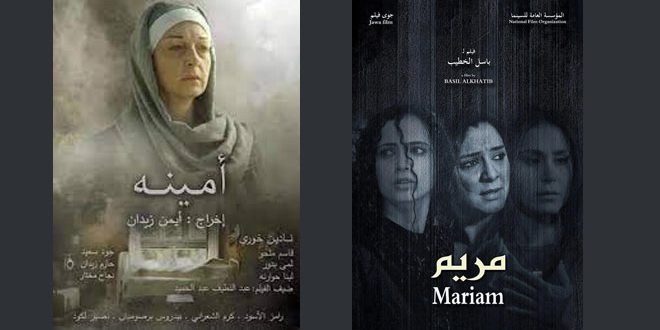
During the ten-year war, the Syrian cinema presented many films that took a dramatic turn in the portrayal of women. One of these films is (Amina), directed by Ayman Zeidan, who presented the story of a Syrian mother, and her role was played by actress Nadine Khoury, the terrorist war that was waged against the homeland and her suffering as a result of her only son being paralyzed and her struggle to protect her family.
The woman appeared in the film “Erased from Memory Forever” by director Ismail Najdat Anzour through the character of Um Nour. Actresses Rana Shmeis played the character Um Nour whose daughter was kidnapped by ISIS terrorists and the Syrian Arab Army liberated her later.
Director Joud Saeed also presented two films. The first entitled (The Sky’s Path), in which the main roles belong to women, and the second (The Star of Morning), where he re-embodied a true story that took place in the city of Homs during the years of war , centered on the phenomenon of kidnapping.
In turn, director Basil Al-Khatib presented a cinematic trilogy centered on Syrian women in times of war, starting with the movie (Maryam) and completing it with the movie (The Mother) to end with (Syrians), shedding light on the nature of Syrian society, especially in this volatile and anxious period with all its details and features in general and its repercussions on the lives of women.
The cinema also depicted the dangers of women doing their work, especially in media, who were kidnapped by terrorists, as in the movie (Until the End of Life), directed by Basil Al-Khatib, produced by the Public Authority for Radio and Television.
As for the medium-length or short feature films, the young director Yazan NajdatAnzour presented a film entitled (Joury), which revolves around a young girl who finds herself alone after losing all her family members in an area besieged by terrorist organizations.
The young director Hazem Ayman Zaidan also presented a film entitled (The Magic Eye) and deals with an issue related to women as well.
O. al-Mohammad