
Why US Owns Rise of Islamic State and Crises in Syria
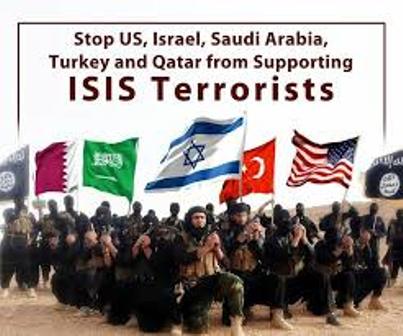
Pundits and politicians are already looking for a convenient explanation for the twin Middle East disasters of the rise of Islamic State and the crises in Syria.
The genuine answer is politically unpalatable, because the primary cause of both calamities is U.S. war and covert operations in the Middle East, followed by the abdication of U.S. power and responsibility for Syria policy to Saudi Arabia and other allies.
The emergence of a new state always involves a complex of factors. But over the past three decades, U.S. covert operations and war have entered repeatedly and powerfully into the chain of causality leading to Islamic State’s present position.
The causal chain begins with the role of the U.S. in creating a mujahedeen force to fight the Soviets in Afghanistan in the 1980s. Osama bin Laden was a key facilitator in training that force in Afghanistan. Without that reckless U.S. policy, the blowback of the later creation of al-Qaida would very likely not have occurred. But it was the U.S. invasion and occupation of Iraq that made al-Qaida a significant political-military force for the first time. The war drew Islamists to Iraq from all over the Middle East.
The actual creation of Islamic State is also directly linked to the Iraq War. The former U.S. commander at Camp Bucca in Iraq has acknowledged that the detention of 24,000 prisoners, including hard-core al-Qaida cadres, Baathist officers and innocent civilians, created a “pressure cooker for extremism.” It was during their confinement in that camp during the U.S. troop surge in Iraq 2007 and 2008 that nine senior al-Qaida military cadres planned the details of how they would create Islamic State.
The Obama administration completed the causal chain by giving the green light to a major war in Syria waged by well-armed and well-trained foreign jihadists.
By October 2014, more than 15,000 foreign fighters, including 2,000 Westerners, were estimated to have gone to Syria.
Obama, focusing on the Iran nuclear agreement, has given no indication that he is troubled by his allies’ approach. If the Bush administration destabilized Iraq in order to increase U.S. military presence and power in the Middle East, the Obama administration has countenanced a proxy war that has destabilized and Syria because of his primary concern with consolidating the U.S. alliances with the Saudis and the other regimes.
Although it has been almost a rigid rule that pundits must ascribe U.S. fealty to its Saudi alliance to oil interests, oil is far from the top of the list of U.S interests today. More important to our national security state is the interest of the Pentagon and the military services to protect the military bases they have in Turkey, Saudi Arabia, Bahrain, Qatar, Kuwait and the UAE. Their need to preserve those alliance relationships is intensified by the Gulf Cooperation Council (GCC) cornucopia of military contracts for U.S. arms manufacturers that assures enormous profits will continue to flow for the foreseeable future. One estimate of the total at stake for the Pentagon and its private allies in military relationships with the GCC is $100 billion to $150 billion over two decades.
Those are crucial bureaucratic and business stakes for the U.S. national security state, which is usually driven by the bottom lines associated with different courses of action.
IRNA
R.S