
Water Scarcity Needs “Urgent and Massive Response” in North Africa and Near East
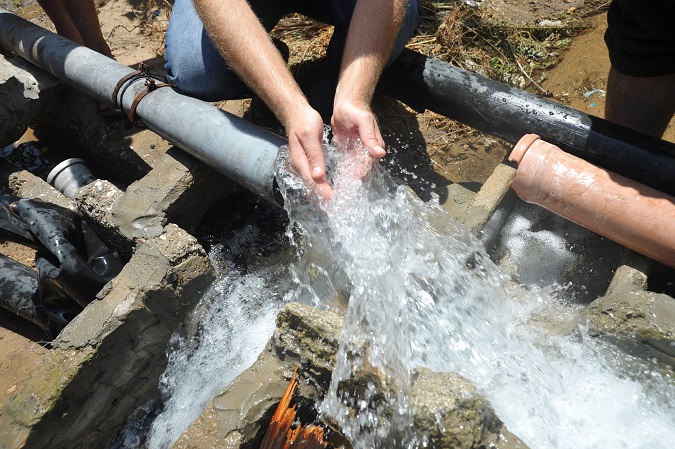
Cairo – Access to water is a fundamental need for food security, human health and agriculture, and its looming scarcity in the North Africa and Middle East region is a huge challenge requiring an “urgent and massive response,” FAO Director-General Jose Graziano da Silva said recently in Cairo.
Accessible fresh water in the region has fallen by two-thirds in the past 40 years. It now amounts to 10 times less per capita availability than the worldwide average, underscoring the need for a significant overhaul of farming systems, he added.
A recent study by FAO showed that higher temperatures may shorten growing seasons in the region by 18 days and reduce agricultural yields a further 27 percent to 55 percent less by the end of this century. The rising sea level in the Nile Delta is exposing Egypt to the danger of losing substantial parts of the most productive agriculture land due to salinization.
Moreover, “competition between water-usage sectors will only intensify in the future between agriculture, energy, industrial production and household needs,” he said.
Graziano da Silva attended a high-level meeting covering FAO’s collaboration with Egypt on the ‘1.5 million feddan initiative’, the government’s plan to reclaim eventually up to two million hectares of desert land for agricultural and other uses.
He expressed his strong support to the Egyptian Authorities and committed to back programmes aiming at addressing water scarcity and promoting climate resilient agriculture.
The Director-General’s visit to Egypt included meetings with President Abdel Fattah el-Sisi, the Ministers of Foreign Affairs, Agriculture and Land Reclamation, Investment and International Cooperation, as well as the Secretary General of the League of Arab States.
FAO’s work in the region has already led to developments such as decentralized groundwater governance schemes in Yemen and Morocco, the introduction of solar pumping in Egypt, water harvesting in Jordan, innovative methods of accounting for water and bolstering drought preparedness in Lebanon and Tunisia, the formulation of the United Arab Emirates’ first national agricultural policy – an example of integrating multiple strategies with a sharp focus on water conservation and climate change – and pilot technology experiments involving installing water meters on farms.
Egypt’s future agenda is particularly tough as the country “needs to look seriously into the choice of crops and the patterns of consumption,” Graziano da Silva warned, pointing to potential water waste in cultivating wheat in the country.
In support of Egypt’s approach, he said FAO would favor holding an agricultural investment forum towards the end of the year aiming at boosting public and private investment in the agriculture value chain to support economic growth and employment generation with the focus on four areas: wheat, sugar, meat and horticulture.
Policy advice and best practice ideas on the governance of irrigation schemes is a key offering in FAO’s Near East and North Africa Water Scarcity Initiative, backed now by a network of more than 30 national and international organizations .
The initiative has gained momentum, buoyed by its endorsement by the League of Arab States as well as donor support, Graziano da Silva said. Urgent actions supporting it include measures aimed at reducing food loss and waste and bolstering the resilience of smallholders and family farmers, that require implementing a mix of social protection interventions, investments and technology transfers, he added.
During his stay, which ended on Thursday the Director-General paid tribute to a group of rural women engaged in improving nutrition at the family level, benefitting from FAO training and revolving funding.
Prepared By : Sh. Kh.