
Washington and Saudi Arabia Adding Fuel to the Fire of Global Jihadism
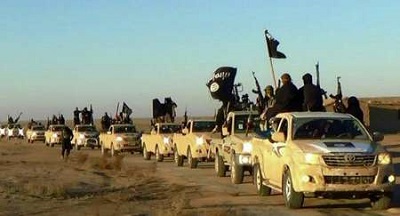
Modern jihadism originated in Saudi Wahhabism (Salafism), sectarian Sunni teaching, American historian and journalist Eric Zuesse notes, adding that Washington has been adding fuel to the fire of Islamic sectarian strife.
In the 1940s Washington and Saudi Arabia established a longstanding alliance based on the oil-for-weapons trade; the relationship caught a second wind in 1973 after Richard Nixon’s de-dollarization of gold, according to Sputnik.
“During 1973, US President Richard Nixon de-dollarized gold, and quickly petroleum became dollarized (the global commodity-basis for currencies). Saudi Arabia had more of the new gold than any other country did,” American historian and journalist Eric Zuesse narrates in his article for Strategic Culture Foundation.
The American historian discusses the rise of the House of Saud back in 18th century and how it was closely linked with Muslim scholar Muhammad ibn Abd al-Wahhab. It was al-Wahhab who formulated the concept of a new Sunni sectarian movement of Wahhabism.
In 1744 Muhammad ibn Saud and Muhammad ibn Abd al Wahhab swore an oath and promised to work together. They decided to establish a state based on the principles of Wahhabism.
However, the Saudis ambitious plan of spreading the new teaching was undermined by the Ottoman Empire: Ottomans did not share radical Wahhabi ideas.
The irony of the situation is that the Ottoman Empire eventually collapsed and the Kingdom of Saudi Arabia emerged in 1932.
The kingdom had been one of the poorest countries in the world until vast reserves of oil were discovered in the Al-Ahsa region.
Needless to say, the US rushed to establish close contacts with the Gulf monarchy. In 1941 the US-controlled Aramco (Arabian American Oil Company) started full-scale development of the Saudi oil fields.
Meanwhile, Saudi Arabia continued to promote its Wahhabi concept aimed primary against its Shiite neighbors in the region. Needless to say, rich oil fields provided the House of Saud with a unique opportunity to realize their political and ideological ideas.
In the 1960s Saudi Arabia became a shelter to the Muslim Brotherhood, another fundamentalist Sunni group, expelled from Egypt.
“And then, US President Jimmy Carter’s National Security Advisor Zbigniew Brzezinski… advised [then US President] Carter in 1978 to import pro-Saudi fighters or ‘mujahedeen’ (later called ‘Taliban’) into the then-Soviet-allied Afghanistan, in order to create there a wave of terrorism that would drain Soviet resources necessary to preserve the Soviets’ Afghan ally, and thus help to bring down the Soviet Union,” Zuesse continues.
Given grave consequences of the radical jihadi movement in Central Asia and Middle East, it seems incredible that Brzezinski never regretted the decision of Washington to arm and train Islamic fundamentalists.
“Regret what? That secret operation was an excellent idea… What is most important to the history of the world? The Taliban or the collapse of the Soviet empire? Some stirred-up Muslims or the liberation of Central Europe and the end of the cold war?” Brzezinski said in an interview with Le Nouvel Observateur in 1998, as quoted by Zuesse.
The Islamic fundamentalism has been fuelled by US-Saudi cooperation. However, American warhawks continue to ignore the fact that jihadism eventually turned into a global threat.
“Today’s jihadism is simply oil-and-gas-funded Wahhabism that got out of control in non-Wahhabist-Salafist-led countries,” Zuesse underscores.
The historian calls attention to the fact that the Gulf kingdoms are being ruled in accordance with medieval traditions which have nothing in common with democracy and human rights values. And still Washington and Riyadh remain close allies.
“What’s unique is the Saudi-US petrodollar alliance, which is spawning wars for both god and greed, which now have blowback that compels both nations’ aristocracies to pump their respective bigotries even harder, the Saudi aristocrats against ‘infidels,’ and the American aristocrats against Russians,” Zuesse concludes.
M.Wassouf