
Valuable Syrian mosaics on show in Athens
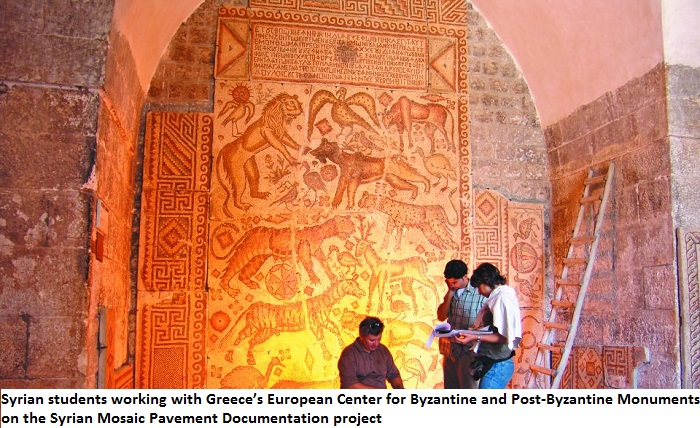
With the aim of shedding light on the importance of the Syrian Cultural heritage, beautiful Syrian mosaics dating from Roman to Byzantine times are being shown for the first time to the public in a digital exhibition organized in cooperation with the University of Damascus at the municipal Melina Mercouri Cultural Center in central Athens.
The show’s centerpiece is a digital map of Syria covering the floor of the exhibition hall. According to the show’s supervisor, archaeology professor Natalia Polou, the map transports visitors to Damascus, Palmyra, Apamea and Maarat al-Nouman – the four key cities where the mosaics were discovered – so they can appreciate the quality of the art that once decorated homes, public buildings and temples across Syria.
The archive is now at the center’s offices in Thessaloniki in northern Greece, serving as a valuable resource not just for researchers interested in East Mediterranean Byzantine art, but also for international law enforcement authorities investigating incidents of looting and destruction at Syria’s museums, monuments and archeological sites.
An online database of Syrian mosaics is also available and the aim is to use this digital archive for the publication of a single tome. It contains more than 7,500 images of 365 mosaics, a fraction of the large number of artifacts that were brought to light in years of archaeological excavations.
An e-table shows the mosaics separated in thematic categories like mythological battles, Christian celebrations, geometrical figures and epigraphs. At the same time, images from before and after the war on Syria will highlight the extent of the destruction wrought on the country’s cultural heritage.
Just before the start of the war on Syria, a group of young students from the University of Damascus managed to document a large number of historic mosaics with the help of Greek experts from the European Center for Byzantine and Post-Byzantine Monuments, a non-profit organization under the purview of the Ministry of Culture. Launched in 2004, the Syrian Mosaic Pavement Documentation project was one of Greece’s most important programs in Syria before its second phase – a workshop on conservation – was violently interrupted by the war in 2008, according to Kathimerini newspaper
Basma Qaddour