
Two Russians demand the lifting of unfair Western coercive measures on Syria
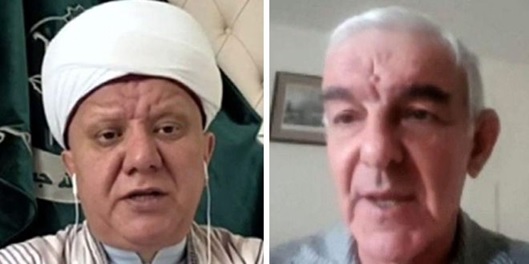
Sheikh Albert Kerghanov, Mufti of Moscow, member of the Social Council of the Russian Federation, expressed his condemnation of the unjust coercive measures imposed by Western countries on Syria and other countries of the world that adhere to its independent national decision and refuse to adopt their malicious policy.
“The leaders of the United States and its allies should reconsider their behavior and realize that they are causing harm and painful suffering to the people of the countries that face these unlawful coercive measures and are also now facing the threat of the Corunavirus,” Kerghanov told SANA correspondent via video conference technology.
Kerghanov stressed that the United Nations and other relevant international organizations should adopt radical decisions to change such positions and relations between countries of the world, expressing his confidence that the people of the Western countries whose politicians adopt double standards reject these practices.
In turn, the political researcher at the Institute of Asian and African Countries affiliated to the Moscow State University, Vladimir Isayev, confirmed that the practices of the United States and its allied Western countries and its policy which are based on imposing various types of coercive economic measures as well as the siege imposed on Syria in the circumstances of the spread of the Coronavirus is a cruel policy, underlining the necessity of lifting these unfair measures so medicines and other necessary medical equipment can be imported to combat this serious epidemic.
Isayev stated in an interview via Skype that the behavior of Western countries indicates that they are not interested in the lives of people in countries that have suffered and are suffering from the scourge of wars due to Western policies and that they disregard the fate of people and only care about their own interests even through inhumane ways.
He pointed out that, despite the proven seriousness of this epidemic, Western countries still reject the initiative of Russia and other countries, including Syria, to engage in international efforts to eradicate it, or at least reduce its disastrous effects.
Inas Abdulkareem