
The Security Council extends the mechanism for bringing humanitarian aid into Syria Sabbagh: The mechanism is politicized and fails to ensure that aid does not reach terrorists
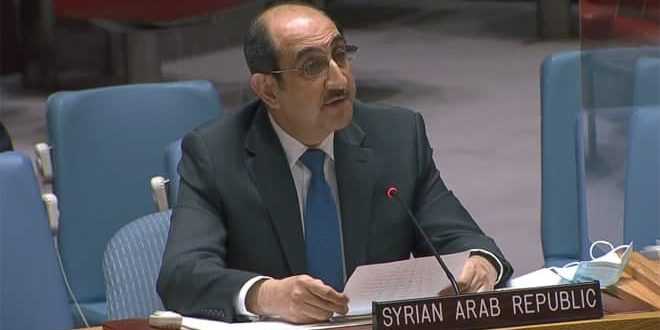
The Council approved the draft resolution on the entry of aid into Syria through (Bab al-Hawa crossing) and extending the effects of Resolution No. 2533 of 2020 for a period of six months, with a subsequent extension for another six months ending on July 10, 2022 based on a report of the UN Secretary-General on the transparency of the process and progress in delivering aid from within.
Syria’s permanent representative to the United Nations, Bassam Sabbagh, said after the vote on the draft resolution that the delegations of Russia, China and other delegations have made efforts to shed light on important aspects that serve the goal of improving the humanitarian situation and delivering aid to those in need from inside Syria, which is in line with the principles of work at the United Nations humanitarian assistance in emergency situations and support for Syria’s efforts in confronting the Corona pandemic and its repercussions on various aspects of life, lifting unilateral coercive measures, and emphasizing that humanitarian activities are broader in scope than simply meeting the emergency relief needs of those affected.They should include he added supporting basic services through water, sanitation, health, education and shelter projects.
Sabbagh pointed out that, on the other hand, Western countries focused their efforts only on extending this mechanism that serves their agendas, stressing once again their indifference to the suffering of the Syrian people and their continuation to target Syria through this mechanism and insisting on violating its sovereignty and besieging its people.He pointed out that some countries exaggerated in describing the mechanism for bringing in aid as (a life-saving artery) misleading with the aim of manipulating the feelings of public opinion and blackmailing its emotions.
Sabbagh indicated that the review tours made by representatives of some Western countries to the areas adjacent to the Bab al-Hawa crossing confirm the bias of those countries and how they ignore the suffering of millions of Syrians in various governorates as a result of the unilateral coercive measures imposed by them and their suspicious silence about the Turkish regime’s use of water as a weapon of war against civilians, as well as the continued looting of Syrian resources by the US and Turkish occupation forces.
Sabbagh stressed Syria’s firm, principled position rejecting this politicized mechanism because it represents a violation of its sovereignty and territorial integrity, and the serious flaws that marred its work in the absence of transparency, credibility, and professionalism in control and distribution, and the failure to ensure that aid reaches its beneficiaries and not to terrorist organizations.
K.Q.