
The reality of economy and tourism in Syria presented before the (FIARAB) conference
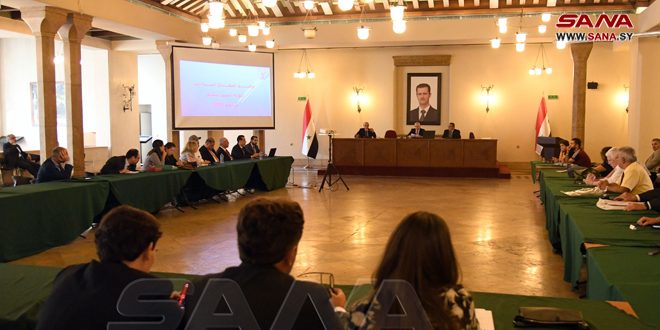
Damascus (ST): Within the activities of the second day of the fiftieth extraordinary conference of the Federation of Arab Institutions in Latin American Countries (FIARAB), the Minister of Economy and Foreign Trade, Dr. Muhammad Samer Al-Khalil, during his meeting with the conference participants in the Reda Saeed Hall in Damascus, reviewed the reality of the Syrian economy from 2005 until 2023.
Minister Al-Khalil stated that during the period between 2005 and 2010, the Syrian economy witnessed significant growth rates, as a result of the improvement in the gross domestic product and the increase in the volume of private investment, whether domestic or foreign, as a result of the economic openness that the country enjoyed during those years, the stability of the exchange rate of the Syrian pound, and the increase in the volume of foreign trade, especially in terms of export, in addition to the small size of Syria’s debt.
Minister Al-Khalil pointed out that the terrorist war on Syria greatly affected the infrastructure and productivity, and caused significant damage and losses in human and financial capital during the period from 2011 to 2016. However, the vitality of the Syrian economy and the victories of the Syrian Arab Army during the period between 2017 and 2020 led to several sectors gradually regaining their health, and agricultural activity gradually returned to growing more widely than in previous years, in addition to the return of the food, agricultural, pharmaceutical, and clothing industries, while inflation rates decreased.
Minister Al-Khalil touched on the external factors during the years 2020 and 2021 that affected the Syrian economy, the most important of which is the problem of Syrian funds deposited in Lebanese banks, the decline in the value of the lira against the dollar, the spread of the Corona epidemic and the repercussions it had on the global economy, the rise in global material prices, the cessation of productive and economic activity, and activation of the Caesar Act and the unilateral coercive measures imposed on the Syrian people.
Minister Al-Khalil also presented the programs implemented by the Ministry of Economy that contribute to encouraging and supporting investment in multiple sectors and providing loan facilities, such as import substitution programs, interest rate support, and incentive programs to support exports abroad.
In response to the attendees’ interventions, Minister Al-Khalil confirmed that Syria produces more than 358 thousand barrels of oil per day, but from areas under the control of the American occupation and groups associated with it, which affected the energy sector as a result of the decrease in supplies and greatly affected the economic sector.
Regarding Syria’s relationship with friendly countries, Minister Al-Khalil pointed out that there are several agreements at the trade and investment levels regarding import and export with lower customs duties, explaining that foreign trade policy has become biased in favor of local production at the expense of imports.
Minister of Tourism, Eng. Mohamed Rami Martini, in turn, presented to the conference participants the reality of the tourism sector by the end of the seventh month of the current year.
Minister Martini pointed out that the tourism sector is resilient, recovering quickly, and supports the national economy, as about one and a half million Arab and foreign tourists visited Syria from the beginning of the year until the end of last July, pointing out that Syria stores all civilizations and divine religions, and it opens its doors to all who wish to visit and see its archaeological, cultural and religious monuments.
K.Q.