
The preparation ma’moul sweet in Daraa
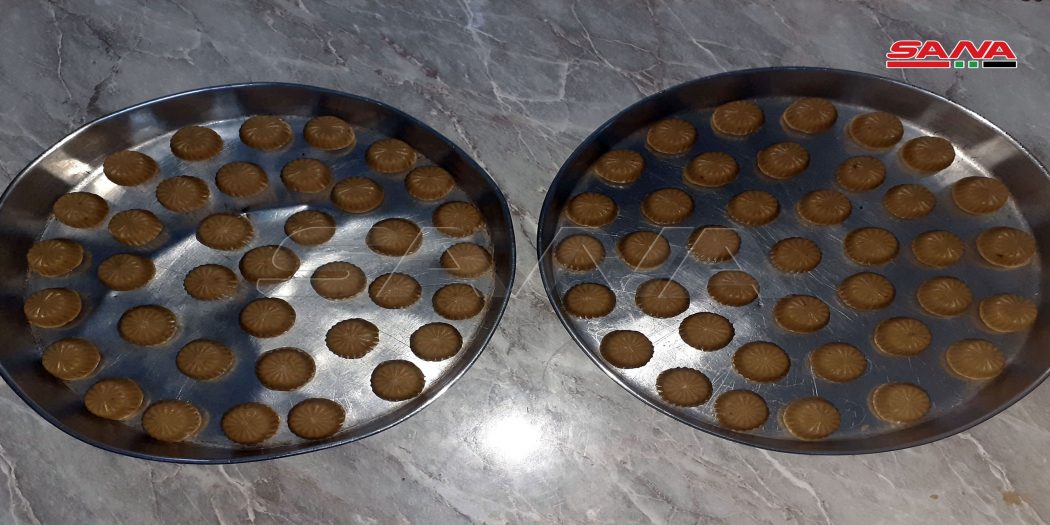
As Eid Al-Fitr approaches, housewives in Daraa are busy preparing various varieties of sweets, especially the Eid sweet, which you can consider as a tradition for most families in most of the Syrian governorate, especially with the high prices of ready-made sweets.
Ma’moul is made in different ways and stuffed with walnuts or dates, according to Umm Bayan Hussein, who said that in the last ten days of each Ramadan, Daraa women buy what the ma’moul needs from ingredients: ghee, oil, cinnamon, yeast, sugar, anise, sesame. Plus the filling.
She pointed out that the tradition of making maamoul is not part of the Hourani heritage, and it is made in cities more than the countryside, and women are proficient in making it, explaining the way of preparation that begins by preparing the dough consisting of flour, sugar, ghee and milk and extending it on special molds after waiting for 15 minutes to take a distinctive shape and then placing it in the oven.
Samer Hassan, a university student, explained that what makes Eid Al-fitr special in Daraa is the baking of ma’moul and the way of presenting it to guests. Most families now prepare these sweets in different ways and with different ingredients and all taste very delicious.
Samir Al-Ali (55 years old) pointed out that Ma’moul is one of the favorite sweets among housewives, especially during the past years, due to its distinctive taste and acceptable preparation cost compared to the prices of sweets in the market. Eid rituals in Daraa begin with the exchange of visits between neighbors, relatives and friends. The host starts with coffee and Arabic sweets. A special visit to families that lost one of their members before Eid Al-Fitr, and this visit is considered a kind of sympathy for the family of the deceased.
Lara Khouli