
The Palestinians and the olive season, steadfastness that defeats the occupation
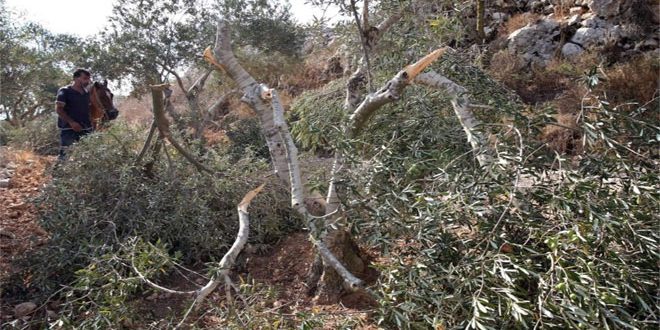
Occupied Jerusalem (ST): Because of its roots that extend deep into the land for hundreds of years, the Israeli occupation wages an open war against the olive trees, sometimes uprooting and looting them, and other times cutting them down or setting them on fire, so that the olive harvest season turns into a battle in which the Palestinians write in their blood “we are steadfast here on our Arab Palestinian land.”
The attacks of the occupation forces and settlers do not only target olives, because they are a symbol of land and steadfastness, but rather an attempt to strike the economy and the foundations of the Palestinian presence on their land in order to uproot it and expand settlement operations.
The Palestinian Foreign Ministry confirmed that this criminal scene, which is taking place in front of the eyes of the international community, is repeated throughout the year, especially before and during the olive season, with the aim of severing the relationship between the Palestinian and his land, pointing out that the statements of condemnation are insufficient and must be translated by placing settler gangs on terrorist lists and by taking practical steps that oblige the occupation authorities to implement the resolutions of international legitimacy and to stop its crimes against the Palestinians, especially the settlements.
The official in charge of the file of resistance to settlements in the West Bank, Ghassan Daghlas, explained in a statement to news reporter that the settlers carried out more than 30 attacks on Palestinian farmers in the West Bank during the harvesting of olives in the past five days, noting that most of the attacks were concentrated in Nablus and Salfit and varied between chopping olive trees, burning them, stealing its fruits, and preventing farmers from accessing their lands, especially those near settlements that are being expanded continuously.
Daghlas indicated that the Palestinian national forces launched a voluntary popular campaign to support farmers during the olive harvest and confront the settlers, as an affirmation of adherence to the land and resistance to all occupation attempts to seize it, raising the slogan “We will remain as long as the thyme and olives remain in our land immersed.”
For his part, the head of the Burin village council, Nidal Najjar, stated that the village, south of Nablus, is surrounded by three Israeli settlements, making the olive fields, which extend over an area of 300 dunums, vulnerable to theft, burning and seizure, in addition to the restrictions imposed by the occupation on farmers to enter their lands.
Najjar pointed out that the occupation sometimes delays allowing farmers to harvest olives in the northern and eastern regions of the village until mid-November.
The situation of olive growers in the Gaza Strip is not different from their situation in the West Bank, where Muhammad Awawdeh explained that the harvesting journey is fraught with dangers and mixed with suffering, as the occupation forces stationed on the outskirts of the Gaza Strip deliberately shoot at the farmers. We were subjected to many attacks in the past, but despite the risks, we defy the occupation and reach our land to pick the olives that we are waiting for throughout the year because it is our only source of income in light of the difficult economic conditions that the Gaza Strip is experiencing as a result of the Israeli siege.
The human rights researcher Hussein Hammad stressed that the direct targeting of Palestinian farmers during the olive harvest season constitutes a threat to their lives and safety and a violation of their right to work, which is guaranteed by international laws.
K.Q.