
The Hidden World Under Our Feet
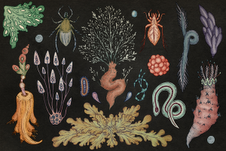
THE world’s worrisome decline in biodiversity is well known. Some experts say we are well on our way toward the sixth great extinction and that by 2100 half of all the world’s plant and animal species may disappear.
Yet one of the most important threats to biodiversity has received little attention — though it lies under our feet.
Scientists using new analytical techniques over the last decade have found that the world’s ocean of soil is one of our largest reservoirs of biodiversity. It contains almost one-third of all living organisms, but only about 1 percent of its micro-organisms have been identified, and the relationships among those myriad life-forms is poorly understood.
Soil is the foundation on which the house of terrestrial biodiversity is built. Without robust soil ecosystems, the world’s food web would be in trouble.
To understand more, scientists recently embarked on what they call the Global Soil Biodiversity Initiative to assess what is known about soil life, pinpoint where it is endangered and determine the health of the essential ecosystem services that soil provides.
The focus is on the life that resides in the soil — the microbes, fungi, nematodes, mites and even gophers that make up a complex web of interrelationships.
A teaspoon of soil may have billions of microbes divided among 5,000 different types, thousands of species of fungi and protozoa, nematodes, mites and a couple of termite species. How these and other pieces all fit together is still largely a mystery.
Forget the term “dumb as dirt.” The complex soil ecosystem is highly evolved and sophisticated. It processes organic waste into soil. It filters and cleans much of the water we drink and the air we breathe by retaining dust and pathogens. It plays a large role in how much carbon dioxide is in the atmosphere. Soil, with all of its organic matter, is second to the oceans as the largest carbon repository on the planet. Annual plowing, erosion and other mismanagement releases carbon in the form of carbon dioxide, and exacerbates climate change.
The last decade of research has overturned a key concept. For decades there was a saying among soil scientists — “everything is everywhere,” which meant that soil was largely the same across the globe. That has proved to be spectacularly untrue.
A 2003 study in the journal Ecosystems estimated that the biodiversity of nearly 5 percent of the nation’s soil was “in danger of substantial loss, or complete extinction, due to agriculture and urbanization,” though that was most likely a very conservative guess, since the planet’s soil was even more unexplored then than today, and study techniques were far less developed.
That means that species critical to some important functions could have already disappeared or be on their way out. That’s why the global soil assessment is a matter of some urgency.
There are numerous threats to soil life. Modern tillage agriculture is a big one, because it deprives soil life of organic matter it needs for food, allows it to dry out and adds pesticides, herbicides and synthetic nitrogen. Soil “sealing” from the asphalt and concrete of suburban sprawl destroys soil life, as do heavy machinery and pollution. Even long-ago insults like acid rain still take a toll on life in the soil by having made the soil more acidic.
THE problem is global. In nearly half of Africa, for example, overgrazing and intensive agriculture has destroyed topsoil and led to desertification.
N.H.Khider
Source: New York Times