
The Dead Cities of Syria
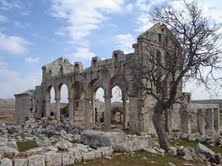
 The environs west and southwest of Aleppo in northern Syria are home to the “Dead Cities” , abandoned ruins of some 700 Byzantine towns, villages and monastic settlements. These ruins are among the greatest treasuries of Byzantine architecture to be found anywhere in the ancient world.
Deserted and desolate today, the region of the Dead Cities once supported an immense and prosperous population, for it was rich in olive groves and was the hinterland of the great Christian city of Antioch. The towns and villages (“cities” is a misnomer but sounds more dramatic) lack the grid plan of ancient cities; the “Dead Cities” instead seem to be settlements that developed organically in the countryside.
After the Islamic conquest of the Byzantine world, the political and demographical center moved from Antioch to Damascus and this region, which depended on Antioch for its prosperity, went into decline. Its inhabitants moved away, leaving behind ghost towns. In the absence of invasions or natural disasters, these towns and villages remained remarkably well-preserved over the centuries.
Today, very little of Antioch survives but the Dead Cities still litter the landscape with astonishingly well-preserved basilicas, monasteries, villas and baths. Indeed, the Dead Cities of Syria provide “one of the best pictures of the world of Late Antiquity to be found anywhere.”
Source:Sacred-destination
M.W