
The Damascene Rose is part of the Syrian identity
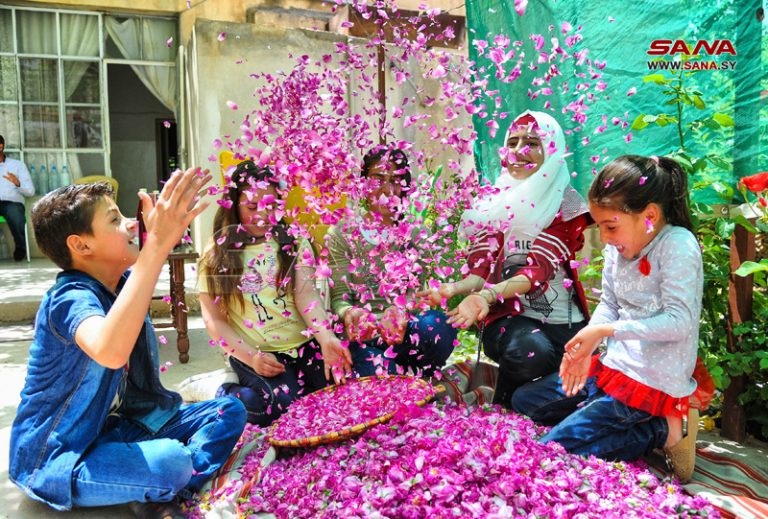
The Damascene Rose has conveyed the name of Syria to the whole world and properly deserved to be included on UNESCO’s Intangible Cultural Heritage of Humanity List in 2019.
Since that time a national plan has been drawn up to preserve the Damascene Rose, which is part of the Syrian identity and its harvest season witnesses wide participation of the residents of the areas where it is grown, in fact its harvest has turned into popular festivals full of color and fragrance.
The national plan to preserve the Damascene rose that the Syrian Trust for Development is working on through the Living Heritage Program is carried out in cooperation with official and civil authorities as an annual local festival in which the people participate, believing in the importance of this heritage and the need to preserve it.
The festival is accompanied by social rituals such as performing Zajal and chants associated with the harvest of the rose, some folkloric dances and special competitions for this unique Syrian ritual.
In a statement posted by the Syrian Trust for Development on social media, it stressed that
“The rose is the most valuable plant for farmers because they live for it, live from it, learn to deal with it from a young age, and innovate in the manufacture of its products, knowing that it is their fragrance that reaches humanity.”
The statement indicated that within the plan to preserve the national Damascene rose, the work is done in an integrated manner with the farmers who plant, harvest and manufacture in the countryside of Damascus, Hama, Lattakia and Aleppo, where this rose is cultivated.
The statement highlighted that the Damascene Rose is part of the cultural identity of these regions and a source of livelihood for its residents and has economic importance stemming from its aromatic, medical and cosmetic benefits.
RawaaGhanam