
Teeth can be used to predict mental health problems, study finds: Kids with thin enamel have a higher risk of developing depression or bipolar
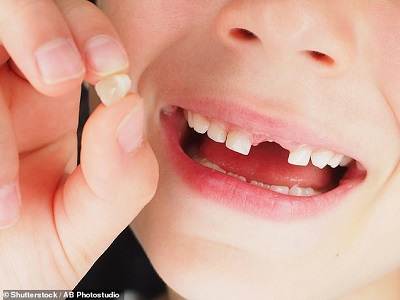
Teeth tell archeologists everything about ancient civilizations – from their diet to their lifestyle to their cause of death.
But new research suggests the bones in our mouths could reveal details about our future, too, according to Daily Mail.
In particular, scientists found teeth could show our risks of mental health disorders such as depression, anxiety, bipolar disorder, and schizophrenia.
Dr Erin Dunn, a psychiatrist at Massachusetts General Hospital, examined lost milk teeth from six-year-olds, and found those with thinner enamel were more likely to have attention deficit issues.
The finding, while maybe logical to archaeologists, is unprecedented in psychiatry, offering an entirely new way to screen for disorders that are increasingly common.
‘It’s something we had never seen or thought of before,’ Dr Dunn said.
For the studyDC, Dr Dunn teamed up with archeologists and anthropologists and public health practitioners.
They asked the parents of 37 children aged six and up in California to donate their teeth when they fell out.
After analyzing each tooth with high-resolution imaging, they compared their analyses behavioral assessments of the children.
They found differences in dimensions and qualities of their teeth were better predictors of mental health than factors that psychiatrists would normally look for, such as the neighborhood they live in or their family setup.
For Dr Dunn, the study showed the benefit of and need for scientists to work across fields.
‘I think that in general scientists can be siloed. People tend to only work with people that have backgrounds that are like theirs. Psychiatrists work with psychiatrists, psychologists work with psychologists.
‘Even though there has been an effort for people to move across disciplines not many do that.
‘This [study] is an artefact for the need for more interdisciplinary science and how efforts can provide opportunities to look at things that are completely unexpected that other fields do all the time.’
N.H.Kh