
Syria’s exports on the rise
Syrian exporters have suffered for years from selling at prices below cost.
When exports stop, prices fall to frightening levels for producers, because production that relies on internal markets only does not cover its costs due to the decline in consumption as a result of a decrease in purchasing power.
Exports have declined in recent years for many reasons, including the rise in shipping costs, and the arrival of the product at high costs that make it uncompetitive in neighboring markets, and this has resulted in the reluctance of many exporters to export to neighboring countries.
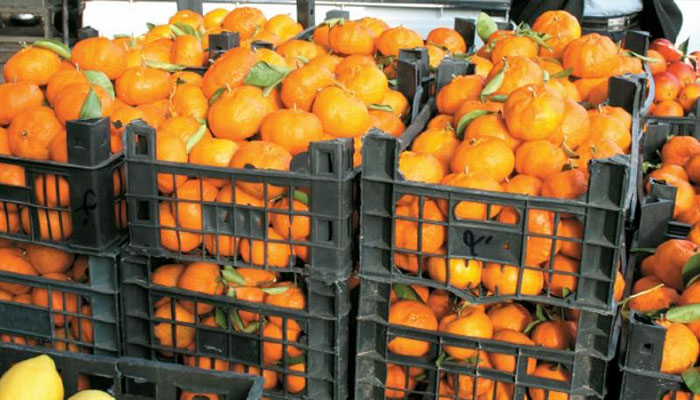
Head of the Export Committee in the Lattakia Chamber of Agriculture, Bassam Al-Ali, said to Tishreen Newspaper that the export of citrus fruits is currently happening at a high rate.
He indicated that the number of refrigerated trucks that leave Lattakia daily reaches to about 25 all going towards the Gulf and Iraq.
Muhammad al-Akkad, a member of the Vegetables and Fruits Export Committee in the “Central Al-Hal Market” in Damascus, stated that the movement of export can not not described as good, and that the types that are exported vary between tomatoes,potatoes, citrus fruits, fruits and pomegranates.
He said that the largest share of Syrian exports goes to Saudi Arabia.
By monitoring the movement of trucks crossing the Jaber-Naseeb crossing, it turns out that the number of cars that left last Friday amounted to about 21, 11 of them to Saudi Arabia, seven of them carried tomatoes, and only two were citrus.
The movement of the rest of the trucks is to Kuwait, Bahrain, Dubai, the Sultanate of Oman and Qatar.
- al-Mohammad