
Syrian women in the contemporary cultural scene…creative and responsible
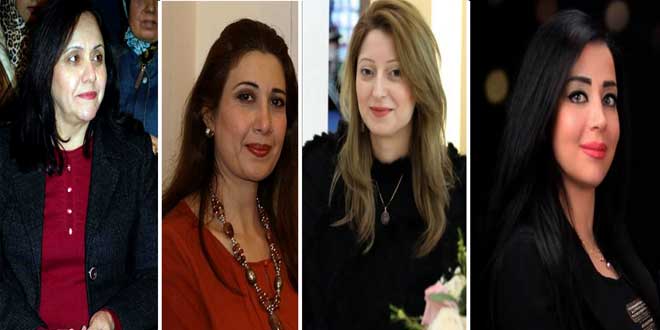
Syrian women in the contemporary cultural scene have been creative leaders and organizers of the cultural work as a whole, she has held, and continues to hold the highest positions in this field. She is one of the most important elements of its lasting success.
The writer Falak Housariah who was one of the first war correspondents in Syria and wrote for decades many novels and story collections is currently a member of the Executive Office for the second session at the Arab Writers’ Union, the oldest Syrian Foundation that brings together writers and intellectuals. She is also the editor-in-chief of the “Al-Mauqef Al-Adabi” magazine.
In a statement to SANA, she said that managing cultural work needs special talents that combine good management, creativity, and the ability to distinguish “good from bad,” as she put it, considering that women’s presence in cultural work is evidence of her success, otherwise she would not be able to prove her presence and importance to work.
In a similar statement, Naima Suleiman, who runs the Department of Culture in Damascus, stated , “in the area of cultural development, women have been distinguished in administrative work by supporting young talent, encouraging them to work with professionals, and ensuring the opportunity for networking and sharing with civil society to make cultural work more popular and polarized to wider segments.”
The plastic artist Rabab Ahmed, who has chaired the Arab Cultural Center in Abu Rummaneh for eight years, said that when a woman turns from creator to managerial in cultural work, her passion leads her to look at the place she runs as if it were her own home and her own family. She seeks to make it like a hive of bees buzzing with activity, rejoice, and love and give it all her time and interests.
In the area of private enterprise management, there are many examples of women’s work, like the translator Abeer Akl, the founder and director of the Dar Akl for Translation and Publishing, who spoke about her experience in founding the House and devoting all her efforts to occupy its privileged position in the Syrian and Arab levels. She stressed that women have great potential within them waiting for the right opportunity to be seen, especially in cultural work, where they deal with the elite and offer a message of thought and patriotism while at the same time achieving a rent.
In the field of university teaching, especially literature, the critic Dr. Rima Diab, who teaches criticism in several colleges, said, “The physiological nature of women helps them succeed in many matters simultaneously, especially when they have extensive knowledge, self-confidence, and objective sense.”
In her lectures and books, she therefore seeks to present criticism as an integral science that is essential to the success of any literary movement.
Dr. Rima is a permanent participant in literary evenings and is the author of numerous books in the area of criticism.
Amal Farhat