
Syrian weavers are keen on reviving loom
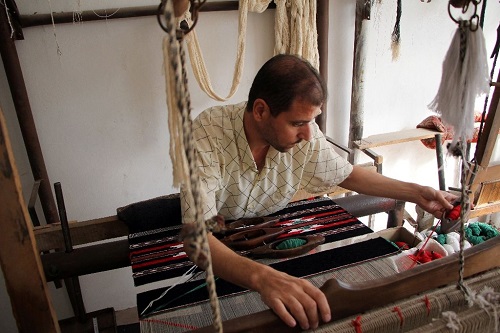
Historical and archaeological data specify the time and place of the first appearance of the first textile loom, Evidence was found indicating that the first loom existed in Damascus. The textile industry was famous in Damascus, and the Canaanites/Phoenicians were famous for their creation of purple fabric in the first millennium B.C.
The development of the fabric was related to the raw material of the threads .The manual loom started to use solid fibers such as hemp, linen, fibers and bark of mulberry and rice trees. Later, more soft materials such as wool, cotton and silk came out to produce more soft and smooth products.

The weaving craft on loom is a handicraft, this handicraft needs more patience. One square meter of the colored carpet needs at least a full day’s work, this period may drag on for up to a week depending on the shape of the inscription and decoration, and the kinds of threads used to inlay the product with.
Beyond the sophisticated technology that prevents many people from weaving and handicraft, Syrian knitters and weavers have attempted to revive the traditional way of making textiles their ancestors followed by relying on manual hands again.
Lara Khouli