
Syrian-Iraqi meeting to launch the ninth phase of the Intergovernmental Hydrological Program
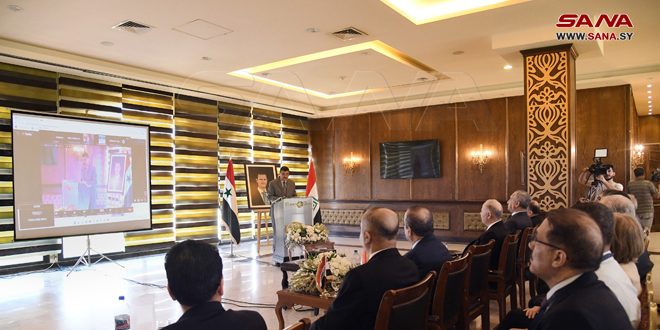
The activities of the Syrian-Iraqi joint meeting to launch the ninth phase of the Intergovernmental Hydrological Program started today at the Dama Rose Hotel in Damascus.
The program, which is implemented in several phases, the first of which was in 1975, aims to meet the challenges related to the water situation at the local and international levels and build capacities at all levels to support better management of water resources.
The Minister of Water Resources, Dr. Tammam Raad, indicated during a speech that the ninth phase of the program was launched in partnership with the Iraqi side, due to the similarity in the challenges facing the water sector in the two countries in terms of water and environmental changes, explaining that the program enhances scientific techniques and human resources to mitigate the effects of these changes through several axes, including scientific research and water education at all levels to help them make decisions on scientific and technical grounds.
For his part, the Iraqi Minister of Water Resources, Mahdi Rashid Al-Hamdani, drew attention to the importance of the program in light of the conditions and climatic changes that have affected the two countries, which are expected to continue for a long time, indicating that the program contributes to exchanging views and involving all sectors and ministries concerned in the two countries to raise awareness towards the use of modern methods and the transition to modern irrigation systems in order to avoid these changes. .
Minister of Higher Education and Scientific Research Dr. Bassam Ibrahim referred to the role of scientific research in light of changing climatic conditions to limit its impact on agriculture, food security, water, health and the environment, as the ministry coordinates with research bodies to prepare integrated studies and avoid the negative effects of these phenomena.
The Iraqi Minister of Environment, Dr. Jassim Abdul Aziz Hammadi Al-Falahi, pointed to the role of the program to find a future vision to deal with the common challenges between the two countries, especially in the decrease in rainfall rates and climate changes, stressing the importance of intensifying cooperation programs and developing plans to confront the repercussions that drought and water scarcity may cause on the future of region.
The Syrian Ambassador to the United Nations Educational, Scientific and Cultural Organization “UNESCO” Lamia Shakkour indicated that the organization’s goal is to implement the ninth phase of the program by activating the role of national, Arab and international expertise and competencies in the fields of water and scientific research in a way that establishes an important cooperation with the science department of the organization, noting that the meeting is a model of cooperation and response in times of crisis and that ensures the implementation of its outputs on the ground in a large and effective manner.
Director of the National Center for Iraqi Water Resources Management Hatem Hussein indicated that the meeting contributes to achieving sustainable development in water resources through the exchange of experiences and the conduct of joint projects between the two countries, indicating that the program’s strategy focuses on several axes, including the exchange and preparation of joint national and international databases, interaction and adaptation with climate changes. and integrated water resources management.
NR