
Syrian government succeeded in returning 650 children from unsuitable work environment to school last year – report
Countries all over the world mark International Day Against Child Labor, which falls on June 12 of each year. This day brings together governments, institutions, workers, civil society, as well as millions of people from all over the world to highlight the plight of working children and how to help them.
The International Labor Organization and the United Nations Children’s Fund (UNICEF) indicate that the lack of early intervention strategies to reduce child labor will lead to a rise in their number, with an estimated increase of 9 million children by the end of this year, as the number of these children reached 160 million, most of whom are in the age group from 5 to 11 year, according to a UNICEF report last year.
In Syria, government and private agencies continue to implement the national plan to combat the worst forms of child labor, according to the Head of the Syrian Commission for Family and Population Affairs Samar Al-Sibai.
Al-Sibai indicated that the plan focuses on empowering families economically, raising awareness of child labor issues, acquainting the public with its worst forms, improving working conditions for children over the age of 15, and promoting legal protection for them.
“The plan also included the educational aspect to reduce school dropouts and enhance vocational education opportunities,” she added.
Al-Sibai pointed out that the commission prepared a study on the reality of child labor in a number of regions to assess the impact of the terrorist war on school dropouts.
Another study was made on the worst forms of child labor through studying cases from the industrial zone in Damascus and Hasya in Homs to describe the phenomenon and analyze its causes according to analytical approach that includes all stakeholders involved in child labour, especially working children themselves.
Al-Sibai revealed that the two studies resulted in a set of proposals related to the educational, economic, social, awareness and legislative reality.
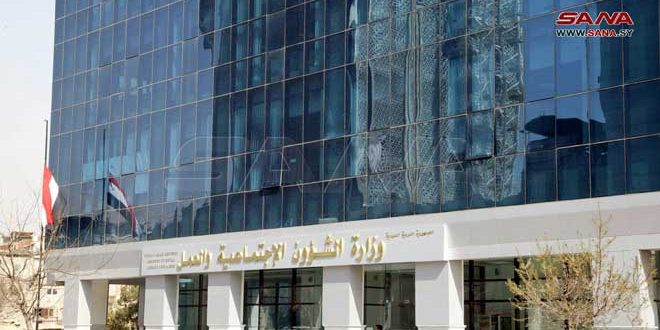
For his part, the Director of the Department of Labor in the Ministry of Social Affairs and Labor Mahmoud Damrani indicated that Labor Law No. 17 of 2010 on regulating work in the private sector includes articles related to child labor over the age of 15 according to the principles and conditions that the employer is obliged to implement, including working hours, rest and type of work and providing a safe and healthy work environment, stressing that its materials comply with international standards.
“The ministry succeeded, through the program to confront the worst forms of child labor implemented with the International Labor Organization, in returning 650 children in the countryside of Damascus, Aleppo and Homs from an unsuitable work environment to school last year,” he clarified.
Damrani pointed out that the Child Protection Law, which was issued last year and aims to strengthen the role of the state in its various public and private institutions in protecting and caring for children, explaining that the law guarantees addressing the phenomenon of child labor and prevents the child from being economically exploited or in performing any work that is likely to be dangerous or an obstacle to his education or harmful to his health.
Basma Qaddour