
Syrian cultural heritage is a prominent mark in history of human civilization
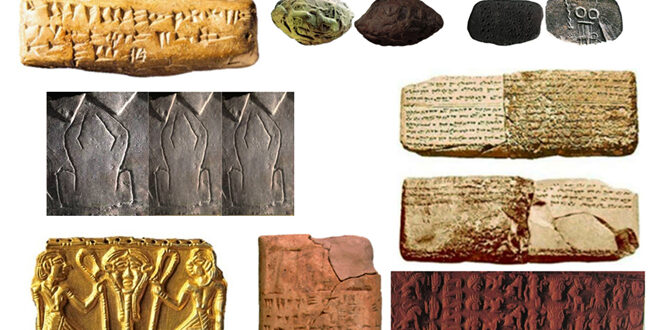
The Syrian cultural heritage is a prominent mark in the history of human civilization since the emergence of the first man, for its global richness, diversity and uniqueness in some of its components, both tangible and intangible.
This heritage embodies a model of the development of human creativity on the land of Syria, the cradle of civilizations and the virgin land for the emergence of agricultural villages and the concept of civilization, urbanization, plastic arts and writing, accounting systems, mining, construction and urban development, and the home of the first alphabet and musical notes in the world.
Syria is home to the oldest archaeological villages in the world and on its land man built his first house and the oldest murals, and the oldest statue carved by humans in the world in the Syrian Golan, and the oldest houses that used colored stone tiles in Tell Al-Maraibat, and the first to carve a human face from clay.
The Syrian archaeological cultural heritage constitutes one of the most important global sources relied upon in documenting and recording past events and understanding the stages through which human civilization has developed.
Syria was one of the first countries to sign international agreements related to the preservation of cultural heritage and combating its illicit trafficking, which were approved by the United Nations Educational, Scientific and Cultural Organization (UNESCO), such as the Hague Convention of 1954 for the Protection of Cultural Property in the Event of Armed Conflict, the Paris Convention of 1970 on the Measures to Prevent the Illicit Import, Export and Transfer of Cultural Property, and the Second Paris Convention of 1972 for the Protection of the Cultural and Natural Heritage.
According to the archaeology expert and reader of ancient inscriptions at the Directorate General of Antiquities, historian Dr. Mahmoud Al-Sayed, there are six archaeological areas in Syria that include 46 sites and hundreds of historical buildings registered on the UNESCO World Heritage List. These are the Old City of Damascus in 1979, the Old City of Bosra in 1980, the Old City of Aleppo in 1986, the site of Palmyra in 1980, the Citadel of Al-Hosn and the Citadel of Saladin in 2006, and the archaeological villages in northern Syria in 2011.
Al-Sayed pointed out that Syrian blown glass has been included on the lists of intangible human cultural heritage that needs urgent preservation. Social practices and rituals, arts, music, skills associated with traditional crafts, practices related to nature and the universe, and folk costumes fall within the intangible cultural heritage in Syrian society.
The Syrian historian noted that world heritage is defined in two types: “cultural and natural.” Cultural heritage has a moral aspect that includes science, literature, values, and customs, and a material aspect that includes tangible things such as monuments, buildings, and events that occur and are transmitted among people. The natural heritage includes physical and biological landmarks that have high aesthetic and scientific value, geological and physiographic formations such as areas containing endangered animals and plants, and natural areas of rare natural beauty that have high and distinct value, such as the site of “Rajm al-Hari” in the occupied Syrian Golan.
He pointed out that the destruction, illegal excavations, and systematic looting of Syrian sites, monuments, and historical artifacts carried out by antiquities gangs and armed terrorist organizations during the war on Syria necessitates criminalizing the deliberate destruction of cultural heritage as a violation of human rights.
He stressed that the process of maintaining, restoring and reviving the Syrian heritage under the current circumstances is a necessity that should not be postponed, as it is an important part of the global human heritage and should be worked on in the early stages of post-war reconstruction.
Al-Sayed confirmed that to protect the Syrian cultural heritage, many measures must be taken starting with the cooperation of the international community, prosecuting those who violate and steal it, spreading awareness of the importance of what we have and the danger of illegal trafficking in cultural property, taking protection measures based on scientific foundations, documenting violations and damages to historical monuments and relics, carrying out the restoration process in a scientifically correct manner, and registering looted and smuggled artifacts abroad on the red list with the aim of preventing their illegal sale or export and retrieving them at a later stage.
Al-Sayed stressed that one of the most important methods of heritage protection is introducing the concept of world heritage protection into educational and teaching programs on a wide scale, and activating cooperation with international and regional organizations and bodies working in the field of protecting the cultural heritage.
Inas Abdulkareem