
Syrian Calligrapher Muhammad Badawi al-Dirani an icon of Arabic and Islamic calligraphy art
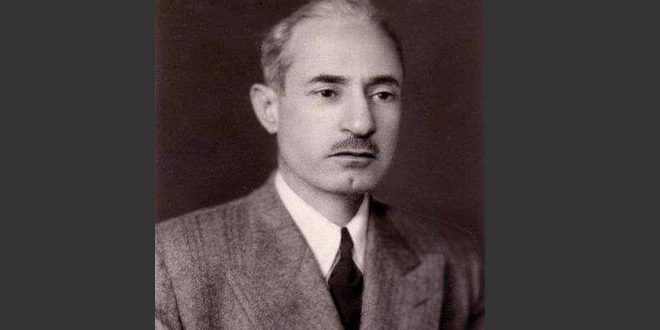
Muhammad Badawi al-Dirani (1894-1967) is a prominent Syrian Calligrapher whose creative artistic works were characterized by a Damascene touch that gained him great reputation among the calligraphers of the Levant.
Iraqi calligrapher Hisham Mohammad al-Baghdadi wrote on al-Dirani’s gravestone that “Badawi al-Dirani mastered the art of Arabic and Islamic calligraphy with a unique charming Damascene style”.
Al-Dirani was born to a Syrian family from Darayya in Damascus countryside. He resided in the Damascene neighborhood of al-Midan where he studied Quranic Sciences. He began practicing the art of calligraphy at a young age. He was an excellent student of calligrapher Yusef Rasa, who contributed to the restoration of the Umayyad Mosque after the fire of 1894. After Rasa’a death, al-Dirani became a student of the Damascene calligrapher Mamdouh al-Sharief. In this period, al-Dirani enhanced his talent and developed his skills in Kufi, Thuluth and Raq’a calligraphy types.
Al-Dirani’s passion to learn more about Arabic calligraphy led him to travel to Cairo in order to study the styles of Egyptian calligraphers including Najeeeb Hawawini, the calligrapher of King Farouk of Egypt. Then he travelled to Baghdad to benefit from the experience of Iraqi calligrapher Hashem Mohammad al-Baghdadi.
Al-Dirani adopted several types of calligraphy including Farsi, Thuluth, Kufi, Raq’a, Dewanee and Nasakhi. His school of calligraphy was distinguished for the inscription of letters in high accuracy and unique harmony.
His calligraphic masterpieces can be seen in many mosques in Damascus, many government buildings, the People’s Assembly, al-Masjid an-Nabawi in al- Medina in Saudi Arabia, Kuwait Chamber of Commerce and many Damascene houses.
Al-Dirani passed away in 1967 before completing his artwork in al-Othman Mosque in al-Maysat neighborhood in Damascus. He was able to accomplish 26 meters of mosaic calligraphy work above the niche of the mosque before he died.
Many Syrian calligraphers, poets and researchers were affected by al-Dirani’s art, including calligraphers Mohamoud al-Hawari, Zuheir Mnini and Abdul Razzaq Qseibati, researcher Ahmad al-Mufti. The Syrian famous poet Nizar Qabbani, lawyer Najat Qassab Hassan, historian Shaker Mustafa, journalist Yaser al-Maleh in addition to many calligraphers in the Islamic world.
Al-Dirani was awarded the order of merits in 1968.
Hamda Mustafa