
Syria Trust for Development calls for protecting the blown glass as a purely Syrian heritage industry
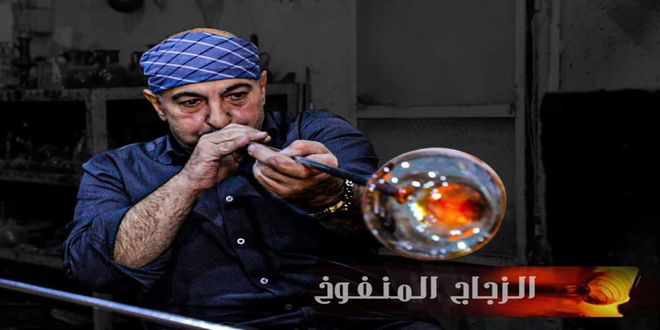
The blown glass industry has passed through several stages and achieved great levels of development and prosperity at certain stages, but it has declined in the light of technological development, which requires urgent action by all governmental and private bodies to determine the priorities and needs of this ancient heritage industry and protect it from extinction, according to the Syria Trust for Development .
The skilled craftsmen of this industry, which was mastered by the Phoenicians, used to produce valuable pieces, that we are still proud of throughout the ages, and that contain much of their spirit and taste.
The blown glass can be manufactured either from broken pieces of glass collected by the craftsmen who melt it and blow it again, or from silica, which is derived from sand, flint, and quartz, the basic components of glass.
The Syria Trust for Development said in a report published on its Facebook page that this Syrian industry dates back to the ninth century BC . The skilled craftsmen of the Syrian coast were distinguished by this industry as they managed to produce wonderful masterpieces of art that were transported to all Syrian regions.
The report made it clear that this industry become part of Syria’s cultural identity and a source of livelihood for a number of families who practiced it and preserved it as a legacy over the years.
However, the war in the country has had a negative impact on this industry, because most of the craftsmen were residing in places where terrorism had spread, which contributed to the destruction of their factories and some of them were forced to leave their homes and factories and move to new areas in search of livelihoods. The report made it clear that blown glass for those people was not only a craft that they inherited from their ancestors, rather, it was like the main source of their livelihood.
The Syria Trust for development pointed out that an urgent preservation plan had been prepared, which included preparing a file on the situation of the blown glass element. This file was presented to the United Nations Educational, Scientific and Cultural Organization for UNESCO to be included as a Syrian heritage element on the list of world human heritage.
The Syria Trust for Development’s urgent plan is part of its role in preserving cultural identity and heritage practices that reflect Syria’s richness and diversity and as part of its belief in the role of such traditional industries and crafts in the recovery of societies after the war.
Rawaa Ghanam