
Syria to Remain No.2 Olive Producer in Arab World
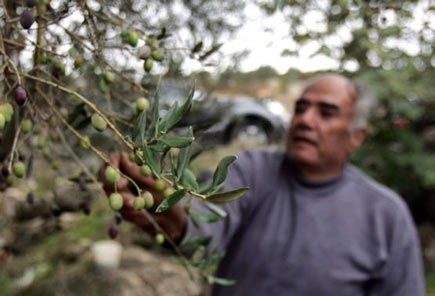
Agriculture adopts vertical expansion strategy to increase production
(ST) – The Directorate of Agricultural Marketing in the Ministry of Agriculture and Agrarian Reform has prepared a study on the Syrian olive oil which has received an international reputation because of its quality and specifications that made it desirable in foreign markets. The study showed that the olive sector is one of the most important sectors of agricultural production, especially after the striking development through the past ten years.
Olive trees are grown on an area of 647 thousand hectares, and the number of olive trees is estimated at around 100 million trees, including 77 million fruit trees, which constitute about 12% of the total cultivated area in Syria and 65% of the total area of fruit trees. The estimated rate of the annual production of olive fruits is about 880 thousand tons; 15-20% of the total amount is used for pickling. The rest of production is used in the extraction of oil and produce about 150-175 thousand tons of oil.
Continuous Increase
The production of olives and olive oil continues to grow as a result of the expansion of the agriculture and the access of new trees in the production as an average 2.3 million trees a year. Syria is ranked the second among Arab countries and the fourth in the world in terms of olive production. The olive production for this season is estimated at 900 thousand tons that produce 175 thousand tons of olive oil and 170 thousand tons of table olives.
Expectations indicate that the production of Syrian olive oil will reach 250 thousand tons by the year 2020 due to the expansion in this agriculture with a consumption rate estimated at about 150 thousand tons that achieve a surplus for export of olive oil up to about 100 thousand tons, the study clarified.
Important Economic Role
The study highlighted the economic importance of olive oil through its contribution by 1.5 -3.5% of the total national income and between 5-9 of the value of agricultural income. Olive sector is a source of livelihood for a large segment of the population of Syria, whereas some 400 thousand families depend on this product as a source of livelihood, in addition to the contribution to achieve food security by providing basic food items represented in olive oil.
The study revealed that exports of olive oil ranging between 18-45 thousand tons, or about 40% of the available total production for export. In 2011exports amounted to 16 thousand tons and 4 thousand tons of olives worth $ 20 million, while the value of exports in 2010.reached 18 thousand tons of oil and 13 thousand tons of olive worth $ 31 million.
Great Difficulties
The study pointed to the existence of difficulties that had a negative impact on the olive sector notably the current circumstances and consequences of high fuel prices, lack of availability of workforce, rising wages and high transport costs in addition to other costs including fertilization, cultivation and pruning. Because of these difficulties, farmers do not achieve any gain in the cultivation of olive and some of them started uprooting their olive trees and turned towards alternative crops.
The study showed that most of the olive oil producers accustomed to use tin containers in storage of olive oil, but most of the factories stopped tin production due to loss of raw material for manufacturing. The rise in the price of tin sheets forced producers to use plastic containers that are not suitable for oil storage.
The study pointed out that table olive (green and black) consumes about 20% of the production. The importance of this fruit requires more attention and care to develop this kind of trees. Olive species include al Sourani, al Khoudeiri, al Doueibli, al Dan, al Jlot and al Mohazzam. These sorts are distributed in Aleppo, Idleb, Lattakia, Tartous, Damascus, Palmyra and Daraa.
Prospects of Developing Olive Cultivation
The study also confirmed that the olive sector is developing in Syria horizontally at an accelerated pace. Ministry of Agriculture adopts strategies for vertical expansion to increase the productivity per unit area and reduce production and marketing costs, opening new doors for the production of organic oil in order to increase the competitiveness of their products in quantity and quality at the local and global levels.
The development of this sector requires research plans that include the stages of production in order to control the cost of production, improve product quality through deepening the study of the genetic resources of the olives and identify their different characteristics. The study calls for working to reduce as much as possible the use of pesticides and dependence on organic fertilizers in order to preserve human health and the environment.
The study presented a series of proposals for the development of olive growing on internal and external sides. On the first side, the proposals provide for mapping out a program of promotion to increase the per capita consumption of oil and table olives. On the external side, it can be through the available means and the work to open new outlets for marketing of olive oil in foreign markets and provide appropriate support to producers and marketers of olive oil in order to ensure the continuation of this agriculture.
The study pointed out the importance of establishing specialized cooperatives concerning olives to help farmers to export surplus production of olive oil and reduce production costs. It is known that 60% of the oil produced in Europe is marketed through cooperatives. The study also recommended setting up e-sites for the promotion of organic olive oil, especially olive cultivation in Syria is considered a clean one with the need for coordination with the Directorate of Agricultural Guidance to take advantage of the farmers’ school with a view to establish pioneering fields to reach the highest production at the lowest costs.
Sharif Al -Khatib