
Syria’s Commitment to What it Pledges
H.E. President Bashar Al-Assad stated in a recent interview with the Italian Rainnews that we joined the international agreement for preventing the use and acquirement of chemical weapons before that resolution came to light. The main part of the Russian initiative is based on our will to do so. So, it’s not the resolution. Actually, it’s about our will. Of course, we have the will, because in 2003 we had a proposal in the United Nations Security Council, to get rid of those weapons in the Middle East, to have a chemical weapons free zone in the Middle East. So, of course we have to comply; this is our history: to comply with every treaty we sign.
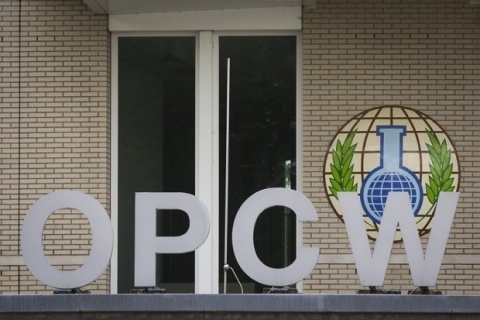
With this in mind, came yesterday’s announcement by the Joint Organisation for the Prohibition of Chemical Weapons (OPCW) and the UN Mission that the government of the Syrian Arab Republic has completed the functional destruction of critical equipment for all of its declared chemical weapons production facilities and mixing/filling plants, rendering them inoperable.
By doing so, Syria has met the deadline set by the OPCW Executive Council to “complete as soon as possible and in any case not later than 1 November 2013, the destruction of chemical weapons production and mixing/filling equipment.”
The Joint OPCW-UN Mission, according to the announcement, has inspected 21 of the 23 sites declared by Syria, and 39 of the 41 facilities located at those sites. The two remaining sites were not visited due to safety and security concerns. But Syria declared those sites as abandoned and that the chemical weapons programme items they contained were moved to other declared sites, which were inspected.
The Joint Mission is now satisfied that it has verified – and seen destroyed – all of Syria’s declared critical production and mixing/filling equipment. Given the progress made in the Joint OPCW-UN Mission in meeting the requirements of the first phase of activities, no further inspection activities are currently planned. The next milestone for the mission will be 15 November, by which time the Executive Council must approve a detailed plan of destruction submitted by Syria to eliminate its chemical weapons stockpile.
Accordingly, Syria’s commitment to what it pledges, praised and given credit to even by the U.S. Secretary of State John Kerry, is indeed remarkable. Of no less remarkable is the Syrian continued commitment to fighting al-Qaeda affiliates as well as to dialogue among the Syrians as the way out from the ongoing crisis.
Syria, which since 1997 stopped the production of chemical weapons, has indeed taken its decision regarding chemical weapons prior to its announcement. Syria doesn’t need any more chemical weapons and thus it presented a proposal in 2003 to the UN Security Council to rid the Middle East from mass destruction weapons; Syria’s accession to Chemical Weapons Convention has nothing to do with US threats and sword-rattling.
Dr. Mohammad Abdo Al-Ibrahim