
Syria, Lebanon discuss measures to facilitate the return of displaced Syrians to their homeland
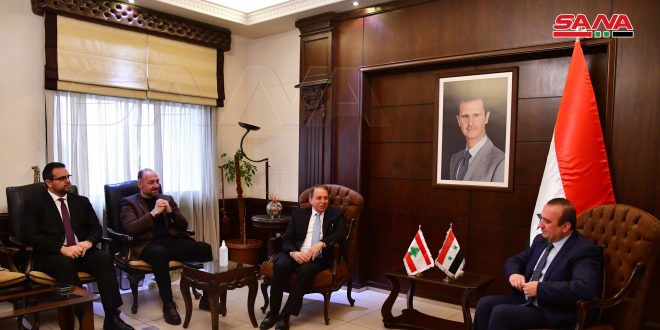
Minister of Local Administration and Environment Hussein Makhlouf and the Lebanese Minister of the Displaced Issam Sharafeddine discussed during a meeting in Damascus on Saturday the measures taken by the two sides to ensure a safe and easy return for the displaced Syrians in Lebanon to their homeland. They also highlighted the Syrian government’s efforts to secure the basic needs of the returnees.
In a statement to journalists following the meeting, Makhlouf said that he briefed the Lebanese minister on the measures taken by the Syrian state to facilitate the return of the Syrian refugees and the displaced to their homeland. In this regard, Makhlouf referred to issuing amnesty decrees, postponing the military service of the returnees for six months, to obtaining missed documents, to registering new births, to providing transport and medical services to the returning families and to supporting them through some projects that can help them ensure their livelihood.
He stressed that Syria is looking forward to enabling all the displaced Syrians to return home without any obstacles. He pointed out that the return of the displaced people and refugees has been delayed due to the unfair siege which has been imposed on Syria by the countries that supported terrorism and which has affected the Syrian citizens daily life and due to the practices of the US and Turkish occupation and their agents who control and loot the Syrian oil, wheat, cotton and other natural resources.
He clarified that the Syrian government has worked relentlessly to alleviate the impacts of the siege through adopting the policy of self-reliance, depending on agriculture, carrying out medium, small and micro-sized projects as well as big investments and rehabilitating the infrastructure and the service facilities in the areas liberated from terrorism.
On his part, the Lebanese minister said that Lebanon and Syria are working hard to enhance cooperation as to implement the national plan adopted by the two countries to speed up the return of the refugees and the displaced.
Hamda Mustafa