
Syria, Iraq to Enhance Economic, Trade Relations
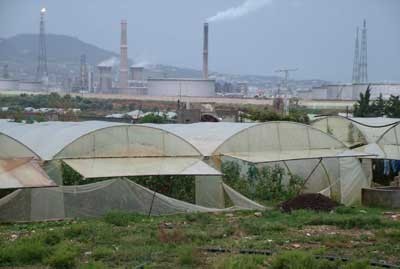

DAMASCUS, (ST) – Iraq has agreed recently to import Syrian agricultural products that are not produced in its territories according to the schedule of agricultural seasons. Iraq’s approval is considered an important step in the path of strengthening economic and trade relations between the two countries, especially because it opens the door wide in front of Syrian agricultural exports under the crisis facing the country and the economic sanctions imposed on most economic sectors.
Certainly, opening an additional market for the Syrian products in a brotherly and neighboring country is an important opportunity for the disposal of Syrian agricultural products. The volume of the Syrian agricultural exports to Iraq constitutes 46 percent of the total Syrian exports to the Arab countries, according to figures by the Central Bureau of Statistics.
The Ministry of Economy and Foreign Trade underlines that Syrian exports to Iraq increased during last November by 45 percent from the previous month and it is expected to double these numbers in the future after the volume of trade exchange between the two countries in 2011 reached about two billion dollars and it is expected to reach three billion dollars by the end of last year.(Statistics of 2012 has not appeared yet).
“This development in the volume of trade exchange between the two countries confirms the need to strengthen the partnership investment between them and create industrial cities and zones,” the ministry said.
Association of the Development and Promotion of Syrian Exports emphasized that development indicators of trade emerged clearly, especially in the growth rate of Syrian exports to Iraq that reached about 40 percent in the year 2011 as it was in 2010.
The Association also stressed, in a study, that competitive trade was one of the most important economic determinants that characterized the experience of the two countries after the adoption of a strategy to encourage exports since the eighties of the last century as an alternative to a strategy of import substitution that prevailed during the period of the past three decades which shows the determinants of competitiveness between Syria and Iraq. The results of the comparison with regard to cross-border trade refers to real problems in the forefront of the high costs of commercial transport and includes the costs of direct transport such as shipping, insurance, and indirect costs such as inventory and storage as well as the costs of border crossings on the documents as a result of delays and obstruction.
The rise of customs tariff in Syria being not yet acceded to the World Trade Organization, which the comparative study shows between the two countries because of the trade and industrial policies based on the policy of import substitution to protect national and industrial products while tariff in Iraq is separated although that Iraq is a member of the World Trade Organization.
The statistics study indicates that the terms of trade exchange is in favor of Syria and this can be explained economically that Syria can get a larger amount of imports to meet the same quantity of exports, showing that, in the past five years, the difference between the prices of exports and imports was in the interest of Syria. The value of per ton exported to Iraq reached to its highest level in 2009 and in turn increased the value of imported ton of Iraq than 5 thousand Syrian pounds in 2005 to more than 32 thousand Syrian pounds in 2010.
The statistics show a surplus in the balance of trade between Syria and Iraq significantly and reached its highest value in 2009 to 125,711 million pounds and a growth rate of 1.6 percent in 2008,while Syrian exports to Iraq in 2010 fell, and the Syrian imports from Iraq retreated by more than exports and thus the balance of trade maintained to a large surplus.
The geographical location is not the only reason in the development of economic and trade relations between the two countries, but there is a formal and legal framework that regulates this relationship through about 37 agreements and memoranda of understanding and protocols of cooperation in the field of scientific, technical, commercial, industrial, navigation, communications, financial and double taxation as well as abolition of import licenses for mutual Syrian commodities between the two countries.
The Ministry of Economy and Foreign Trade, in the study, confirms that it has broad areas of cooperation between the two countries in the fields of trade and the establishment of centers of foreign trade and exhibitions centre and the establishment of supermarkets, storage and free zones as well as areas of cooperation with the private sector and increase investment opportunities and capital flows in addition to cooperation in the fields of finance and customs, banking industry, minerals, specifications and standards, oil and mineral wealth.
Finally, the study calls to activate the role of joint Businessmen Councils and the role of the private sector in the development of trade as well as the establishment of joint ventures, promote meetings and communications between the parties, provide all border facilities for business and cooperation between the institutions of an economic nature between the two countries, benefit from the Syrian experiences in the fields that Iraq needs in various available sectors for investment in Iraq, the development of transport, rely on rail transport between the two countries and provide all possible facilities in customs ports to facilitate the process of transfer.
Sh. Kh