
Syria chairs the 6th session of the Arab Council for Population and Development in Cairo
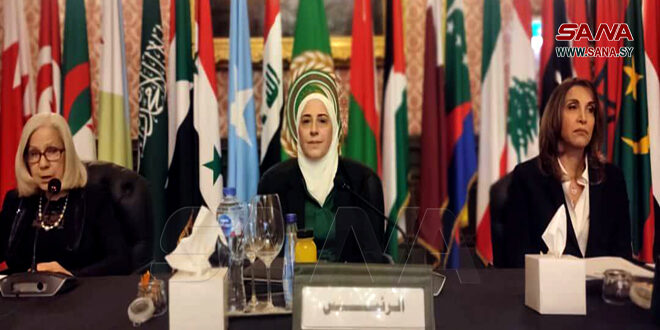
Cairo, (ST)-With the participation of Syria, the Arab Council for Population and Development held its sixth session in Cairo yesterday with the participation of the ministers of social affairs and heads of delegations of member states.
At the beginning of the session, the the presidency of the sixth session of the Arab Council for Population and Development was handed over to the Syrian Minister of Social Affairs and Labor Samar al-Sebai, head of the Syrian delegation representing the Syrian Arab Republic.
In her opening speech, al-Sebai indicated that the meeting represents a rich opportunity to discuss the issue of “population dynamics”, which is a fundamental pillar of development in its various human and economic dimensions, and to provide a wide opportunity for consultation and exchange of experiences with the aim of achieving further progress in the standards of joint Arab work and in the mechanisms of its implementation in a way that enhances the foundations of social justice, supports balanced growth, and ensures reaching the best levels of comprehensive and sustainable population development.
Al-Sebai stressed that the ongoing barbaric Israeli aggression on Palestine and Lebanon, its repeated attacks on Syria, and the massacres, genocide, ethnic cleansing, and destruction of infrastructure committed by this entity exacerbate the health, social, and economic challenges facing Arab countries.
She pointed out that Syria received about 600 thousand arrivals from Lebanon during the last two months, where the Syrian government worked in cooperation with civil society to secure the necessities of life, relief, food, medical and health needs, accommodation services in hosting centers and providing the necessary psychological and social support to alleviate the humanitarian suffering of the arrivals.
She criticized the policies of usurping and plundering wealth and depriving peoples of this wealth, and imposing unilateral coercive measures on many countries in the region, which led to waves of mass displacement and migration and inequality in access to basic services, which have become a major obstacle to launching process of development.
Al-Sebai stressed that the population challenges and their dynamic interconnectedness with the economic, social and health variables facing the Arab region in its great diversity require unifying efforts and strengthening joint Arab action to address them.
At the conclusion of its meetings, the Council adopted a set of decisions on several items related to the exchange of population data on expatriates, studying the challenges and causes related to the unequal population distribution between urban and rural areas, and enabling the elderly to participate effectively in society.
Syria was previously elected to head the Executive Office of the Arab Population Council for the next two years, and the Republic of Iraq was elected as Vice President.
The Syrian delegation included Ambassador Hussam Al-Din Ala, Permanent Representative of the Syrian Arab Republic to the League of Arab States, and member of the Advisory Committee of the Arab Council for Population and Development, Waddah Al-Rakad.
Aourwa Deep