
Syria backs WHO’s efforts to reach consensual type of emergency response: Health Minister
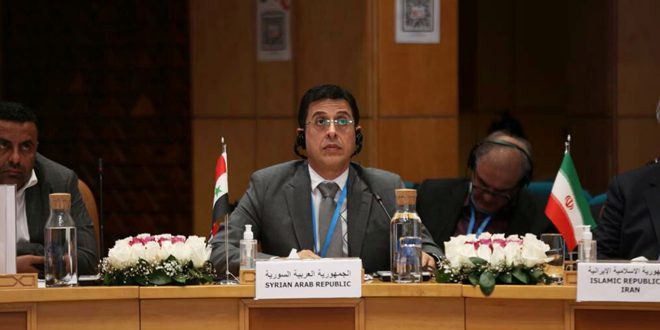
Minister of Health Hasan Al-Ghabbash has stated that Syria and all countries member in the World Health Organization (WHO) are facing various health dangers and emergency situations that have political, social, health and economic repercussions.
In a statement on emergency response during the 69th Session of the WHO’s Regional Committee for Eastern Mediterranean, currently held in Cairo, Al-Ghabbash said that getting ready for effective emergency response is one of the important challenges that face health systems in the international community and that hamper efforts to achieve the goals of 2030 Agenda for Sustainable Development.
The minister affirmed the importance of the WHO’s main obligations within the framework of the International Health Regulations 2005, noting the roganization’s role in responding to emergencies and in supporting member countries’ recovery efforts.
Al-Ghabbash explained that Syria is accelerating work to achieve early recovery from the impacts of more than ten years of war on the country accompanied by the COVID-19 pandemic, stressing that the response was interactive in general, particularly with the emergence of some cholera cases in Syria.
He asserted the need to strengthen the Syrian health system in the domains of information systems, management of healthcare staff, ensuring regional experts, securing enough funding and providing the health technology and medicines necessary for humanitarian response actions to support the country’s early recovery efforts particularly the work to rehabilitate what terrorism has destroyed.
In this regard, the minister stressed Syria’s support for the efforts being exerted by the WHO’s bodies and committees with the aim of reaching an effective consensual type of emergency response.
Hamda Mustafa