
Slovak Prime Minister announces his country’s intention to stop arms exports to the Turkish regime
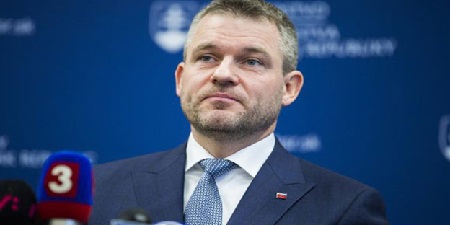
On October 22, Slovak Prime Minister Peter Pellegrini announced his country’s intention to stop granting licenses for arms exports to the Turkish regime following its aggression on the Syrian territory.
Pellegrini stated that Slovakia shares the European Union’s position on the Turkish aggression on Syrian territory, pointing out that the practices of the Turkish regime disturb the stability in the whole region and cause the deterioration of the humanitarian situation in northern Syria.
Pellegrini clarified that the arms embargo to Turkey would include all new contracts, adding that this decision comes in line with the EU recommendation in this regard.
In the Czech Republic, the Presidency of the “Stan Movement”, represented in the Czech House of Representatives, condemned the continuation of the Turkish aggression on Syria, stressing that it represents a flagrant violation of international law.
It expressed support for taking economic and military steps against the Turkish regime, calling on Czech MPs in the European Parliament to stop membership negotiations between the European Union and Turkey.
For his part, the President of the Czech Parliamentary Group for Friendship with Syria, Dr. Stanislav Grosbic, stressed the need of boosting solidarity with the Syrian people who face imperialist and extremist forces, eliminating unilateral coercive sanctions imposed on Syria and contributing to the stability of the situation in Syria.
Head of the Pirate Party, represented in the Parliament, Ivan Bartosch expressed intention in continuing to organize demonstrations against the Turkish aggression on Syria, pointing out that the first event was organized yesterday evening in the Palatski Square in Prague.
Other demonstrations against the Turkish aggression on the Syrian territories will be held in many cities of Czech.
The Turkish regime is still launching an attack on a number of cities, villages and towns in the countryside of Al-Hasakah and Raqqa, which resulted in the death and injury of hundreds of civilians, including children, women and workers in the service sectors, in addition to causing significant material damage in service facilities and important infrastructure such as dams and power and water plants.
Inas Abdulkareem