
Secret of how plants regulate their vitamin C production revealed
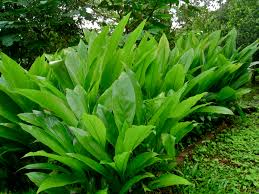
Professor Roger Hellens, working with Dr William Laing from New Zealand’s Plant and Food Research, has discovered the mechanism plants use to regulate the levels of Vitamin C in each of their cells in response to the environment.
“Understanding these mechanisms may help in plant breeding programs to produce hardier plant crops and improve human health because iron deficiency anemia is the most common form of malnutrition worldwide,” Professor Hellens said.
“This discovery will also help us to understand why some plants such as the Kakadu plum are able to accumulate super-high levels of vitamin C.
“We humans gradually lost the ability to produce our own vitamin C thousands of years ago because it was so abundant in our hominid ancestors’ largely fruit diet.
“As we know, fruit can be higher in vitamin C than leafy vegetables so we can now study why fruit is so high and why some fruits make huge amounts.”
Professor Hellens said plants responded to factors in the environment like extreme light or drought by producing vitamin C, a powerful antioxidant, to protect themselves from damage.
“Each cell assesses whether it should produce more of the antioxidant which would absorb the energy from the high levels of light or stop the damaging oxidative process in amount the a dehydrated plant.
“In vitamin C regulation it is the ascorbate molecules which interact with a critical enzyme in the biochemical pathways to make vitamin C. Plants can move the level of ascorbic acid between cells as needed.”
Professor Hellens said plants had two ways to regulate cell processes.
“One way is during transcription when DNA is turned into the messenger molecule RNA, the molecule that distinguishes cells into different types of tissue. The second way is to regulate while turning RNA into an enzyme that makes vitamin C.
“So if a cell wants to increase its level of vitamin C it’s generally got two ways to do it — and we’ve discovered vitamins C uses the second method, and in an unexpected way.
“We discovered it’s not whether the cell is making the RNA but whether the RNA is converted into a protein that is the deciding mechanism.
“It’s very interesting because we found it was the level of vitamin C itself in each cell that decides whether RNA turns into the protein which makes vitamin C.
Source: Science Daily
N.H.Khider