
Sculptor Rami Waqaf: The Syrian sculpting has its own characteristics
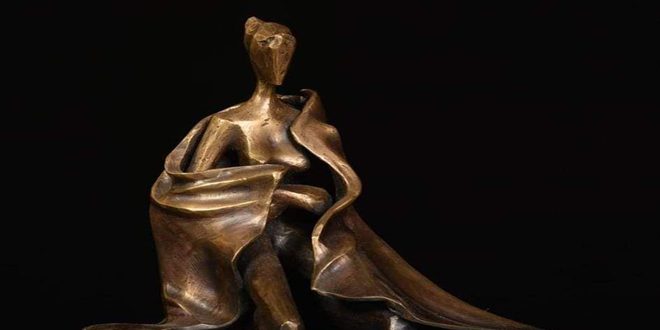
Sculptor Rami Waqaf believes that the true artist must live the journey of permanent research , as he should renew his ideas and tools and invent creative ideas in order to keep his artistic experience away from monotony and repetition and to make his own way as well.
SANA quoted Waqaf as saying that the reality of sculpting in Syria is currently better than the rest of the Syrian plastic arts during the war years, as the artists who left abroad were very few, which contributed to the continuation of the sculptural production process that is associated with research and permanent experimentation.
He went on say: “The past twenty years have witnessed an increase in the number of contemporary Syrian sculptors who have important experiences at all artistic levels as their experiences are not in line with the international sculptural schools, which gives them a “Syrian privacy” and helped a number of them to reach Globalism”.
Waqaf distinguishes between the sculptures he formulates within his own creative worlds which are open to all possibilities and those honoring works that he is required to accomplish for cultural festivals and others as they carry specific meanings that he tries to formulate in his own style.
Regarding the acquisition of artwork in wartime, Waqaf shows that the Syrian sculptors have bypassed competition within the local art market and have benefited from the world of virtual marketing to be ambassadors of the Syrian art in the whole world through their sculptural works that show new technologies and innovative ideas which receive great attention from art lovers in all the world.
Waqaf stressed that stability and safety are important for the renaissance of the arts, expressing optimism about the future of Syrian sculpture.
“Our people are naturally creative in all fields, when the war is over, we will witness important creative products from different generations in sculpture and other arts,” he concluded.
The sculptor Rami Waqaf was born in Tartous in 1975. He is a designer of awards, posters, and visual identity for the Damascus International Film Festival for several years and for other festivals.
He won the first prize for designing the Best Shield for the Damascus Festival for Culture and Heritage
He participated in many group and individual exhibitions locally and abroad, his works are acquired internally and externally.
Amal Farhat