
Sanctions Removal On Geneva Table, SaysRyabkov
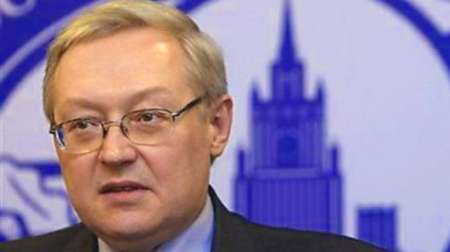
Moscow– Russian Deputy Foreign Minister Sergey Ryabkov has said that lifting of anti-Iran sanctions is an issue on the table of the ongoing nuclear talks in Geneva.
According to ItarTass, Ryabkov said Arak nuclear reactor and the anti-Iran sanctions are two major issues that remained unresolved in the nuclear talks.
The Russian top nuclear negotiator said as the Group 5+1 has been “dealing with the two issues as a package for a long time and an internal balance between the different components of the deal is very sensitive,’ he would not give a priority to any of the two issues.
Speaking to reporters upon arrival in Geneva for the 11th round of the nuclear talks which is scheduled for Wednesday, Ryabkov said that assessing which issue is more pressing would be harmful to the process of achieving a positive result in the talks.
He said it is hard to foresee the outcome of the nuclear talks and that the amount of the progress made during the talks would be clear after it ends.
Officials from Iran and the world six powers (US, Britain, Russia, France and China plus Germany) are to resume their nuclear talks in Switzerland later on Wednesday to resolve the remaining issues.
The latest round of talks between Iran and P5+1 held in November in Vienna did not produce a comprehensive deal on Iran’s nuclear program and the sides agreed to continue the discussions until July 2015.

Paper believes New Nuclear Talks will bear fruit
Meanwhile in Tehran,’Iran Daily’ on Wednesday expressed its belief that strong indications exist which show that the new nuclear talks, between Iran and the six world powers, will finally bear fruit.
The reason why the nuclear talks failed, despite both sides’ determination to reach a comprehensive deal before the November-24 deadline was ‘due to lack of time’, the English-language paper noted.
But the very fact that the decision between Iran-P5+1 to extend the talks for another seven months clearly indicates that they have not, what the paper says ‘abandoned’ the talks.
The political and economic situation in the world leaves no option but to settle the nuclear dispute through a win-win solution, underscored the paper in its Opinion column.
Each side seeks to secure its own interests at the talks but the process of the negotiations in the past year has raised hope that the nuclear case will be closed before the new deadline. Iran’s nuclear negotiating team is in Geneva for fresh round of discussions with the P5+1 as well as bilateral meetings with the US and other members of the group, it noted.
Both sides are well aware of the situation in the world and the region. That’s why they are resolute to come to an agreement to narrow the gaps. In the US, Republicans will take control of the Congress as of January and this is expected to create new challenges for President Barack Obama. The Obama administration has been under fire over its foreign policy, especially with regard to Iran’s nuclear case.

Iran’s might determining factor in nuclear talks
On the other hand in Tehran,former presidential candidate and Mayor of Tehran Mohammad BaqerGhalibaf said that Iran’s power is a determining factor in nuclear talks with G5+1.
Speaking in a local ceremony, he noted that what caused world powers to come to the negotiations table was Iran’s might at international and regional scenes.
The country’s strength was a determining factor in success of nuclear talks with G5+1, Ghalibaf added.
He underlined that Iran’s power has roots in the country’s Islamic philosophy of Jihad and martyrdom.
Senior officials from Iran and the G5+1 group continue negotiations over Tehran’s nuclear energy program in the Swiss city of Geneva.
This round of the talks, the first after the seven-month extension of the nuclear talks, will continue on Wednesday three weeks after Tehran and the six countries failed to reach a final agreement by a November 24 deadline.
IRNA
R.S