
Russia, Syria Send Bus Convoy to Evacuate Refugees from Syria’s Rukban camp
MOSCOW – Russia and Syria have sent bus convoys to the Rukban refugee camp to evacuate people seeking to leave the US-controlled territory, with no response received from the United States to guarantee the safety of the operation, head of the Russian Center for Syrian Reconciliation Lt. Gen. Sergei Solomatin said on Friday, according to Sputnik.
“In accordance with the March 1st decision made at the meeting of the Russian-Syrian Joint Coordination Committee for the return of refugees, in order to prevent a humanitarian catastrophe in the Rukban refugee camp, bus convoys were formed and sent to the Jleb checkpoint for the voluntary and unhindered return of Rukban camp residents from at-Tanf to the places of their permanent residence”, Solomatin said.
Solomatin added that “no response has been received from the American side to allow the passage of the humanitarian convoy and guarantee the safety of its movement” in the 34-mile zone around the US base in at-Tanf.
The Syrian government, meanwhile, guarantees the security of returning temporarily displaced persons and a simplified procedure for retrieving their documents, according to Solomatin.
Solomatin also added that as of 28 February, a total of 224,740 Syrian refugees returned to their home country, Sputnik said.
Alexander Marchenko, a representative of the Russian Foreign Ministry, said Friday that Washington is delaying the relocation of refugees from the Rukban camp, as it aspires to organize convoys with international humanitarian assistance that will enable further existence of the camp.
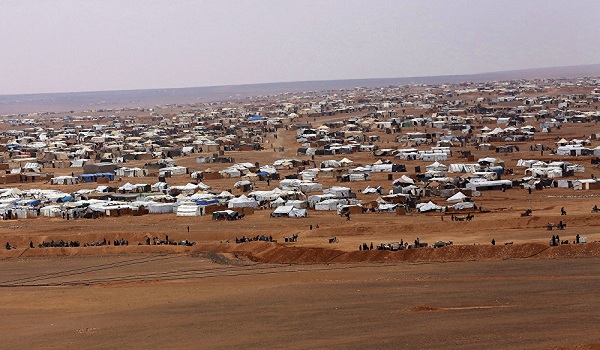
The Rukban camp, which houses about 40,000 displaced people, is located in the southern part of Syria, not far from Jordan. The area that became a refugee camp for Syrian residents back in 2014 is now the US-controlled zone.
In January this year, the World Health Organization (WHO) described people residing in the camp as “trapped”, adding that they live “in deplorable conditions”. Limited water supply, bitterly cold weather and poorly functioning health care facilities contribute to the rise of diseases, which include influenza, measles, tuberculosis and chronic respiratory diseases, the WHO stated.
H.M