
‘Riyadh Used Cluster Bombs on Yemen’
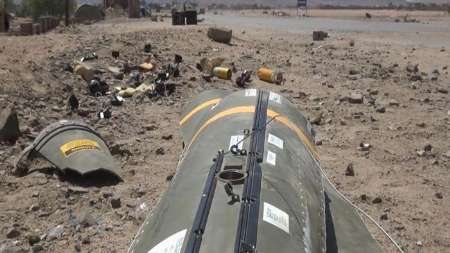
Amnesty International says new evidence confirms that Saudi Arabia has used US-manufactured cluster munitions in a recent airstrike on the Yemeni capital of Sana’a.
On Friday, the London-based rights group said Riyadh dropped the internationally banned cluster munitions on Sana’a in an air attack on January 6, which killed a 16-year-old boy and injured at least six other civilians.
The organization also said the attack scattered sub munitions in at least four different residential neighborhoods.
Amnesty also urged the Persian Gulf kingdom to immediately stop using the weapons.
This comes as Saudi Arabia admitted on January 12 that its military had used cluster bombs in the aggression against Yemen.
The spokesman for the Saudi military, Ahmad al-Asiri, claimed that Riyadh had used cluster bombs just once in an airstrike on the northwestern province of Hajjah to attack cars belonging to Yemeni fighters nearly nine months ago.
Earlier this month, the UN human rights office said it had received reports that Saudi forces had used cluster bombs in Hajjah, adding that a UN team found remnants of 29 cluster sub munitions in the village of al-Odair. Local sources in Hajjah also confirmed the repeated use of the bombs in attacks against villages, saying the airstrikes had caused significant loss of life among the civilians.
On January 8, UN Secretary General Ban Ki-moon also expressed concern over Saudi Arabia’s intensifying airstrikes against civilians. He said, if proved, Riyadh’s use of cluster bombs in the capital, Sana’a, may amount to a “war crime.”
On Saturday, Saudi warplanes resumed their airstrikes on the impoverished Arab country with reports saying the kingdom’s warplanes launched three airstrikes on Sirwah district in Ma’rib Province.
Riyadh also conducted air raids on Sana’a and targeted an institute and a water well in Rada’ district of al-Baydah Province as well.
Meanwhile, the Yemeni army and popular committees launched rocket attacks on the Saudi military positions of al-Khadra and Khabash in the kingdom’s province of Najran in retaliation for Riyadh’s non-stop airstrikes on their country.
The Yemeni forces also fired rockets at military positions in the Saudi province of Jizan.
The Saudi regime has been carrying out airstrikes against the Arab world’s poorest nation since March 26, 2015. More than 7,500 people have been killed and over 14,000 others injured since the onset of the campaign.
IRNA
R.S