
Regrowing functional joints in frogs
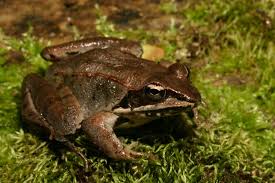
In a first, researchers have regenerated functional joints in frogs by activating a newly-found “reintegration” mechanism. Further understanding of this process may help transplanted tissues integrate with the original organs and limbs after surgical removal or amputation.
“We expect that by applying this approach to other animals, we may also achieve functional joint regeneration in mammals, including humans, in the future,” says author Kiyokazu Agata.
Some animals — for instance newts — can regenerate a smaller, but fully functioning limb after the original has become detached. Frogs are considered to be the intermediate between such animals and mammals that cannot regenerate limbs. Frogs regenerate “spikes,” which cartilage rods are protruding from the disfigured area. These new cartilage limbs lack joints, and are therefore unable to bend at will.
A functional joint requires integration of multiple tissues: two opposing skeletal elements forming an interlocking structure, and muscles which insert into skeletal tissues via tendons across joints. Newts, but not frogs, are capable of reconnecting these tissues.
When a frog limb is detached at an elbow joint, however, the interaction between the remaining and the regenerated tissues affects the regrowth of the regenerated elbow so that it resembles the original tissue more closely. As a result, the tissue attached to the joint is more similar in size to the original limb. The team named this interaction mechanism “reintegration.”
The researchers hope that further understanding of these mechanisms could ultimately bring about limb regeneration in mammals — and in the long run perhaps even humans.
“As a next step we would like to attempt functional joint regeneration in mice by activating the reintegration mechanism,” said Agata.
Source: Science daily
N.H.Khider