
Portuguese words of Arabic origin
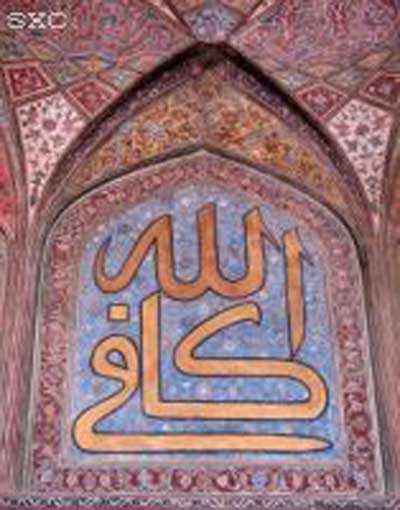

For nearly eight centuries the Iberian Peninsula was under the rule Arab and Berber peoples. This period, as well as other periods throughout history, brought contributions from Arabic to the Portuguese language. The Arabic contribution to Portuguese vocabulary is likely to be the greatest non-Latin influence.
The Portuguese words derived from Arabic are usually related to geography, agriculture, architecture, astronomy, mathematics, social and legal institutions, chemicals, food and clothing. Many of these words begin with “al”, which is the Arabic invariable definite article. For example, Alcorão = al-quran = o Corão (the Koran). Apparently, over time the distinction between the article and the words disappeared and we ended up identifying both of them as only one word. So when we say “o Alcorão” (the Alcoran) in Portuguese we are actually repeating the article twice saying the “the Koran.”
The article “al” also appears slightly modified depending on the initial letter of the following word. This way, as-sukkar became açúcar(sugar), ar-ruzz became arroz (rice) and so on. It’s possible to find several word lists with Portuguese words derived from Arabic. Here are a few words chosen to illustrate the influence of Arabic on Portuguese:
Aduana (meaning customs): from the Arabic ad-dīwān, which means “the office”. Various Arabic words in Portuguese refer to military organization and the State.
Algoz (executioner): from the Arabic al-gozz meaning a tribe from where executers where recruited.
Açafrão (saffron): from the Arabic az-za’afran, which means yellow.
Arroba (unit of weight, equivalent to 32 lb or 15 kg): from the Arabic ar-ruba’a, which means one quarter or a fourth part.
Fulano (so-and-so) : from the Arabic fula – , meaning someone, somebody, a certain person.
Xeque (check): from the Arabic xah. Used in chess it means an attack on the king.
Armazém (warehouse) from the Arabic al-mahazán, it means the attic, the warehouse.
Oxalá!: interjection that means ‘God willing!’. It comes From the Arabic in sha allah or inshallah.
Compiled by:Maysa Wassouf