
Peskov: Transporting gunmen from Syria and Libya to Karabakh area poses a threat to region
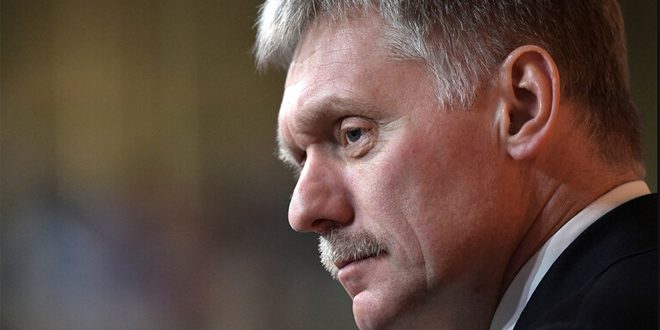
Russian presidential spokesperson Dmitry Peskov has asserted that transporting gunmen from Syria and Libya to the disputed Nagorno-Karabakh area poses a threat to the region.
He told reporters that what is happening in Nagorno-Karabakh is being closely watched by the Russian military.
The Kremlin representative explained that the Russian military is closely monitoring the situation on the line of contact, where the fighting is continuing. Peskov stressed that all information is carefully analyzed, and all statements made by international leaders, statements made “at the highest level from different countries of the world” are carefully recorded. Thus, the spokesperson for the Russian president answered a question about what data the Kremlin has on Turkey’s participation in this situation.
Peskov said that Moscow did not approve Turkey’s statements about its political support to Azerbaijan in connection with the situation in Nagorno-Karabakh.
“Of course, we do not support such statements, we do not agree with them,” said the Kremlin representative. He recalled his recent words that “it is not worth adding fuel to the fire”. “We continue to call for restraint on the part of all regional countries, and especially on the part of countries in conflict to achieve an immediate ceasefire,” Peskov said.
“Putin told the meeting’s participants about preparations for a joint statement on Nagorno-Karabakh by the presidents of Russia, the U.S. and France,” Peskov was cited as saying.
He also affirmed that Western intelligence agencies – in particular, agents from the American CIA – are working with Russian opposition figure Alexey Navalny.
“Probably, it is not the patient [Navalny] who works for the Western special services, but that the Western intelligence services who work with him – this would be more correct [to say],” Dmitry Peskov explained. “I can even be specific: these days, specialists from the Central Intelligence Agency (CIA) of the United States of America are working with him.”
“This isn’t the first time he’s been given different instructions,” the spokesman continued. “The instructions given to the patient are obvious. We have seen such patterns of behavior on more than one occasion.”
Compiled by: Basma Qaddour