
Patrick Cockburn: U.S. Turns Blind Eye as Saudis Fund Jihadists in Syrian Conflict
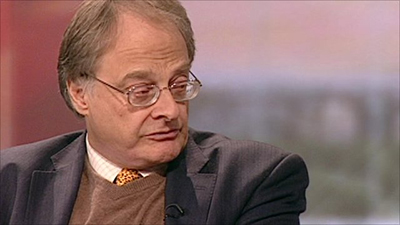
To discuss the role of foreign powers fueling the ongoing conflict in Syria, we are joined by Patrick Cockburn, Middle East correspondent for The Independent. “It is clearly a proxy war. This might have started off as a popular uprising in Syria, but by now it has four or five different conflicts wrapped into one,” Cockburn explains. “You have an opposition, but an opposition that is fragmented and really proxies for foreign powers, notably Saudi Arabia, Qatar, Turkey plays a role.” He recently wrote the article, “Mass Murder in the Middle East Is Funded by Our Friends the Saudis: Everyone Knows Where al-Qaida Gets Its Money, But While the Violence is Sectarian, the West Does Nothing.”
This is Democracy Now! AMY GOODMAN: We are, though, speaking also with Patrick Cockburn, who’s in London right now, Middle East correspondent for The Independent. If you could take it from there, Patrick, and describe—I mean, you’re talking about the biggest emergency in the U.N.’s history, this crisis, the worst since World War II, as the U.N. is describing it right now. Do you see this as a proxy war? And between what countries, and for what, Patrick?
PATRICK COCKBURN: Oh, it is clearly a proxy war. I mean, this may have started off as a popular uprising in Syria, but by now it has four or five different conflicts wrapped into one, that—and you have an opposition, but an opposition which is fragmented and really proxies for foreign powers, notably Saudi Arabia, Qatar. Turkey plays a role. What has changed recently, since midsummer, is that Saudi Arabia is becoming the main financier for the terrorist military groups inside Syria. Qatar is playing a lesser role. And the Saudis are trying to develop a Sunni Islamic force that is against the Syrian government in Damascus, but is also against al-Qaeda. But this is, even so, very much a sectarian force, which is already being blamed for sectarian attacks on Christians and Druze and Alawites. There, then, of course, you also have the United States and Britain and France. A recent defector from the Free Syrian Army, who joined the al-Qaeda affiliate, Islamic State of Iraq and the Levant, said he was continually attending meetings—I don’t know—he didn’t say where, but probably in Turkey—in which always representatives of foreign intelligence services turned up, and at one moment while being presided over by the Saudi deputy defense minister.
NERMEEN SHAIKH: Well, Patrick Cockburn, could you explain what exactly happened to the Syrian National Coalition and the Free Syrian Army, the main opposition group that the U.S. and Britain and other countries in the West were backing and hoping would be a legitimate replacement, possibly, in the future to the regime?
PATRICK COCKBURN: Yeah, there was always an element of pretense in this, pretending that the Free Syrian Army and the Syrian National Coalition were—represented Syrians inside the country. It was always very much an outside exile development. And, you know, they never really controlled much on the ground. And what they did control is now very little. That’s—you know, the headquarters was overrun by the Islamic Front, which is a sort of combination of Sunni groups, appears to be backed by Saudi Arabia. So, basically, it’s been a disaster. So these so-called sort of moderate elements don’t—have never had much influence inside Syria and now seem to be sort of almost completely marginalized.
AMY GOODMAN: And the significance of Idris leaving, going over the border into Turkey? Talk about who he is and his role.
PATRICK COCKBURN: Well, he’s the general—the former general who was—you know, I used to watch him and wonder how did he have so much time to appear on CNN and so many other programs abroad. It didn’t leave much time to direct military action. But I think it did reflect the fact that he was very much a figure which was useful for Western governments and Western media to promote as the leader of the “revolt” in Syria. But he was always pretty isolated, though he got a lot of believers outside the country. Now he seems to be on the run, really, between Turkey and Qatar. But there was always—I mean, it’s really pretenses being exposed about these movements and individuals not being representative of the opposition within Syria, and that opposition being far more sectarian, close to al-Qaeda than foreign governments were prepared to admit or foreign media was prepared to admit, even a year ago.
AMY GOODMAN: We’re talking to Patrick Cockburn, Middle East correspondent for The Independent. His latest piece is called “Starving in Syria: The Biggest Emergency in the U.N.’s History.” He’s also just out of Iraq. We want to find out about the terrible violence there, as well, and talk more about Saudi Arabia’s role—not much discussion of that, at least in the United States—in what’s going on in Syria.
NERMEEN SHAIKH: We want to ask you, Patrick Cockburn, about Reporters Without Borders, who just released—has just revealed that at least 10 journalists and 35 citizen-journalists have been killed in Syria in 2013. The group said 49 journalists were abducted in Syria, more than the rest of the world combined. In a statement, Reporters Without Borders said, quote, “2013 was a turning point because Jihadi groups began kidnapping and murdering journalists in the so-called ‘liberated’ zones for the first time since the start of the uprising in 2011.” Patrick Cockburn, could you talk about the dangers that journalists confront in Syria? And who is behind the increasing strength of these jihadi groups in Syria?
PATRICK COCKBURN: Yeah, it—I mean, over the last year—I’d put it even earlier—it’s been getting more and more dangerous, I think, sort of—in fact, almost impossible these days for foreign journalists to visit “””rebel”””-held areas. Some have been picked up, you know, just when they crossed the border. Also very threatening is the fact that some who thought they had protection from local “rebel” commanders have found that when they come to a checkpoint controlled by the jihadis, by—of the Islamic State of Iraq and the Levant, or somebody like that, that it isn’t just they who get kidnapped, but the—some Free Syrian Army commander with them and his men also get kidnapped. So, the old protectors can’t protect themselves, and certainly can’t protect foreign journalists.
Why does it happen? Well, people are after ransom. I mean, a lot of these groups, you know, under these different rubrics of Free Syrian Army or maybe Islamic Front or different—are really sort of part-time bandits. Some would say whole-time bandits. They change their colors depending on who’s supplying them with money. They’re prepared to claim strong religious belief or the opposite, depending on where they can get supplies. But all of these—one of the factors that’s happening has been the criminalization of the military forces of the Syrian opposition. And foreign journalists are the victims, Syrian journalists are the victims, and ordinary Syrians are the victims. In some senses, foreign journalists are now in a—having the same dangers inflicted on them that apply for anybody within the “rebel” areas.
AMY GOODMAN: Last month, Secretary of State John Kerry held talks in Saudi Arabia with King Abdullah. The meeting came amidst reported tensions between the two sides over Syria, Iran and the Israel-Palestine peace talks. At a news conference, Kerry said the United States and Saudi Arabia were in agreement.
AMY GOODMAN: Patrick Cockburn, you’ve also written about the differences, the growing differences between Saudi Arabia and the United States, and you have a piece headlined “Mass Murder in the Middle East Is Funded by Our Friends the Saudis.” Can you elaborate on this?
PATRICK COCKBURN: Sure. I find it—well, you know, it is one of the most extraordinary aspects of the turmoil in the Middle East that the Saudi backing for extreme Sunni organizations, for jihadi organizations, isn’t opposed by the U.S. more vigorously. If you would look at the official 9/11 Commission report, it said the main backers for Saudi—for al-Qaeda are private Saudi donors and donors in the other Gulf states, the Sunni Gulf states. Wikipedia released a memorandum from Hillary Clinton, I think in the end of 2009, many years later.
NERMEEN SHAIKH: WikiLeaks. WikiLeaks.
PATRICK COCKBURN: And what did it say? Exactly the same thing. The main backers for al-Qaeda-type organizations of Sunni-organized fanatical jihadi groups is Saudi private donors in Saudi Arabia and the Gulf. And, you know, at the moment in Syria, Syria has taken over the funding of militant military groups who, in their own programs, say, “We are Sunni groups.” They don’t deny their sectarianism. They only seem to differ from al-Qaeda in that they—al-Qaeda is independent of Saudi Arabia, and these people are dependent on Saudi Arabia. So I think there’s a whole series of Frankenstein monsters both in Syria and in northern Iraq that have been created and supported and aided by private citizens and at times the state in Saudi Arabia, but the U.S. has refused to do anything about this.
It really is absurd to focus on tiny al-Qaeda groups in the hill villages of Yemen without looking at these very dangerous developments in northern Iraq and eastern and northern Syria, where al-Qaeda and its affiliates for the first time control a great swath of territory really from the upper reaches of the Tigris River to the coast of the Mediterranean. This is a very big area. You know, it’s an extraordinary development. Saudi Arabia has played a key role in this development. But there’s been very little reaction in the U.S. or Western Europe or from these many security agencies that are meant to be focusing on al-Qaeda.
NERMEEN SHAIKH: Patrick Cockburn, I’d just like to say that the statement by Hillary Clinton was released by WikiLeaks and not Wikipedia. I wanted to ask you, though, why you think the U.S. has been relatively silent on—
PATRICK COCKBURN: Sorry, yeah.
NERMEEN SHAIKH: —on Saudi’s role—on Saudi Arabia’s role. One of the things that you point out is that these Sunni jihadist groups principally target Shias, not only in Iraq, but also in Pakistan and in Syria, and that may in some sense account for U.S. silence. Could you talk about some of the other reasons?
PATRICK COCKBURN: Yeah, I think that that’s one of the main reasons, and many of these killings of Shia get very little publicity. And then, Saudi Arabia has, through a distribution of arms contracts, through its money, sort of made itself part of the international establishment, in which normally foreign leaders visiting Saudi Arabia are—don’t bring up these delicate topics and put very little pressure on the Saudis to do anything about it. But, you know, it is one of the—it enables the Saudis to really go on supporting jihadi organizations at the state or private level, in the same way that they were doing in Afghanistan, post-Afghanistan, when they supported the Taliban, before 9/11, after 9/11, during Iraq, after Iraq. There seems no end to it. But it is rather astonishing that there isn’t less reaction from governments and the media in the U.S. and Western Europe.
AMY GOODMAN: Well, what about that, the issue of the media in the United States and how it covers Saudi Arabia?
PATRICK COCKBURN: Yeah, well, much of the time it doesn’t really cover Saudi Arabia, and it’s usually rather sort of delicate coverage. Of course, the Saudis don’t make it easy for journalists to have access. But many of the facts about Saudi Arabia’s relationships to al-Qaeda and to Sunni jihadi organizations don’t require any investigation. I mean, you know, they’re admitted. They’re in plain view. And still nothing is done about it.
You know, these are sort of attacks on—drone attacks or other attacks in northern Waziristan against al-Qaeda in Yemen, in Somalia, are really peripheral to the main problem, which is centered in Saudi Arabia and the Gulf. And the outcome of the support for these extreme organizations is to be seen in northern Iraq, western Iraq, which is now substantially under the control of al-Qaeda-linked organizations, and across the border in Syria, right the way from the—along the Euphrates River right to Aleppo and to the Mediterranean coast. So, you know, it is extraordinary that al-Qaeda has been the great sort of winner of the conflicts over the last—whenever it is, since 9/11, and they’ve—and managed to make such tremendous gains without much opposition from Washington or London or Paris.
M.A.