
Participants in the Arab Wheat Conference call for the establishment of an Arab gene bank for grain crops
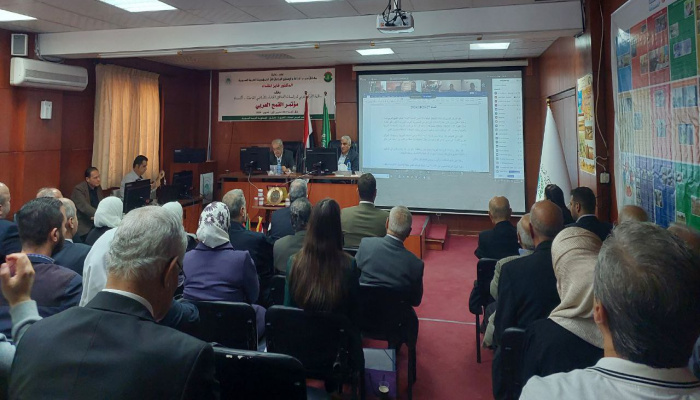
The Participants in the Arab Wheat Conference called for the establishment of an Arab gene bank for genetic resources, local strains and approved varieties of grain crops, which are collected, preserved and multiplied periodically.
ACSAD is responsible for establishing and managing this bank.
The participants in the conference, which was held under the patronage of the Minister of Agriculture, Dr. Fayez Al-Mikdad, at the headquarters of the Arab Center for the Studies of Arid Zones and Dry Lands (ACSAD) in Damascus called at the conclusion of its work to establish cooperative partnerships between Arab agricultural research centers and ACSAD organizations, ICARDA, FAO.
They also called for establishing partnerships between the Arab Organization for Agricultural Development, and Arab and international centers and financing houses, and to support agricultural research activities, training and capacity building in developing wheat cultivation and publishing research in the peer-reviewed Arab Journal of Arid Environments.
The conference called in its final statement on Arab countries to support ACSAD’s programs in developing high-yield wheat varieties that are resistant to various conditions with good quality specifications, and to emphasize the acceleration of the adoption of promising strains resulting from Arab efficiency experiments for their high productivity and resistance to the negative effects of climate change.
The conference also called for expanding the cultivation of wheat varieties developed by ACSAD and approved in Arab countries, and to assign the Arab Center ACSAD to implement an Arab development project to expand wheat cultivation, increase yields, and modernize production technology.
Moreover, the conference called to give greater importance to qualitative and technological characteristics in breeding and genetic improvement programs for wheat crops and to provide government support for wheat cultivation by providing agricultural production inputs at reasonable prices, sufficient quantities, and at the appropriate time to encourage farmers to expand the cultivation of this strategic food crop and achieve food security.
RaghdaSawas