
Old Ports of the Syrian Coast
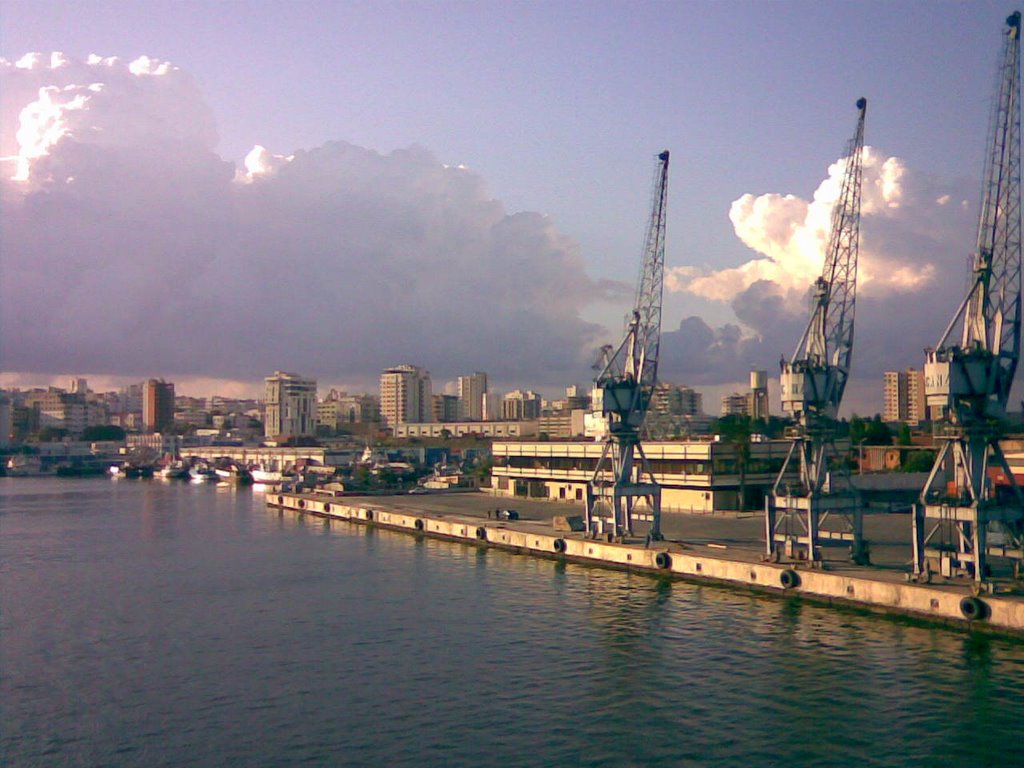
Ugarit literature depicted the struggle between Ba’al and Yam. The Canaanites made the Mediterranean an internal lake for their Trade. Arwad, an artificial island built to increase the area of land. The Mediterranean played an important role in the life of the peoples that settled the Syrian coast.
It was mentioned in the literature and legends of people as an element of owe, fear, challenge, and generosity. Along its coasts many civilizations prospered.
Knowledge, sciences, creative talents, elegant arts and diverse cultures always urged us to discover the relation between man and the sea, and to look for legends and mythologies. In the mythological thought of the old Arab Orient, water was the primary surrounding, that is the main element of creation linked strongly with the underworld. Water, gave life to everything, and the sea was one of its aspects. It was always considered the major threat to “Earth and its population.
Sea trade:
Canaanite ships used to carry the different goods from a port to another, buy and sell and exchange in a ceaseless movement. The remains of one of these ships that belong to 1325 BC, were found in the Greek port of Ullo Poron. The ship had molds for striking metals, complete pieces of weaponry, raw materials, potteries and containers for keeping oils. It was discovered that these different goods came from several sources which means that Canaanite ships used to roam along the shores of the Mediterranean. Of the most prominent ports on the Syrian coast was Arwad, which archaeological and geological researches prove that it is not a natural island, rather it is an artificial one, built intentionally, in the same way modern ports are built, to increase the area of the land used for constructions and living. Originally it was made of three islands, the Canaanite Phoenicians connected them together and extended constructions towards the east to form what is today known as the island of Arwad.
Ports along the coast:
Ugarit, 9 km north of the present Lattakia, was the regional capital of the Canaanite cities along the coast in the second millennium BC. Phoenicia prospered as a great sea trade center which necessitated the existence of several ports and marinas to satisfy the urgent needs of its growing trade. The gulf of “Mint alBaida. was no longer capable of absorbing the bustling movement of a large number of ships, so other ports were built like Ibn Hani. Archaeological discoveries revealed many trade stations between Ugarit and “Ras al Basit., since, it seems, that the Syrian coast was struck by storms and high waves, things that obliged boats and small ships to look for safer harbors where food and water are available. Therefore we find that trade stations like ( Antarados i.e.old Tartous, al Tahoune, Marbat Hseinat, the municipal pier, and Carna which replaced Antarados in the Roman period) were founded at short distances from each other along the coast. The same applies to al Marqab, Tall Darouk and Tall Sokas, Jableh port and its old harbours. We notice that the old city of Jableh still keeps the Roman and Hellenistic type of roads, as is the case in Ramita in Lattakia, while the port was built near a rocky height with the remains of an ancient tower looking from the north to the south.
The old port of Lattakia, as mentioned in old documents was no more than a small basin built by the Phoenicians to prosper during the Greek period. Greek historian Estragon wrote that the port was a main anchoring port and now forms the old port of the city which in the past was a small artificial basin faced by a smaller basin in the north with a natural landing pier in the middle on which a tower topped by a minaret was built, a Phoenician Canaanite style of building double ports to avoid the changing stormy winds of the Mediterranean.
Haifaa Mafalani