
Ocean warming is making waves stronger!
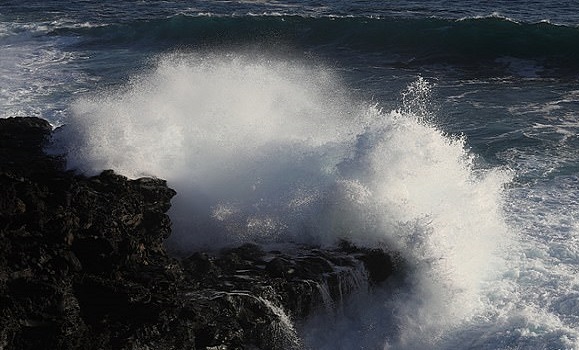
Flooding is not the only threat posed to coastal communities by climate change with harbours and breakwaters at risk of damage
Ocean waves have been growing stronger and more deadly as oceans all over the world gradually heat as a result of climate change, according to a new study.
Analysis of the marine environment showed increases in wind speed and wave heights are leaving coastal communities at risk of damage, according to Daily Mail .
Factors such as rising sea levels, increasing global temperatures and declining sea ice all contribute to upper ocean warming and stronger ocean waves.
The findings could help researchers understand how ocean waves respond to warming and the impact this could have on coastal communities.
The team, from the University of California, found that the increase in power was larger for already-extreme waves, compared to average waves.
Until this study, a link between the increase in wave energy and global warming had remained undetected.
The research centred around the energy contained in ocean waves, which is transmitted from the wind and transformed into wave motion.
This metric, called wave power, has been increasing in direct association with warming of the ocean surface, experts found.
Upper ocean warming – detected as a rising trend in sea-surface temperatures – influences global wind patterns and is making ocean waves stronger.
‘For the first time, we have identified a global signal of the effect of global warming in wave climate,’ said Borja Reguero, a researcher in the Institute of Marine Sciences at the University of California, who led the research.
‘In fact, wave power has increased globally by 0.4 percent per year since 1948, and this increase is correlated with the increasing sea-surface temperatures, both globally and by ocean regions,’ he said.
This research can now help scientists predict how wave power will change in future, particularly in relation to sea level height.
It could also help anticipate the impacts global warming could have on infrastructure, coastal cities, and small island states.
The study notes that the researchers saw evidence of this increase during the ‘most energetic storm seasons.
N.H.Kh