
More than bugs: Spiders also like an occasional vegetarian meal
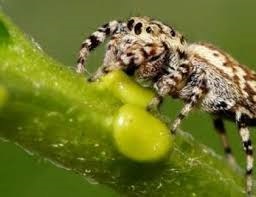
Spiders are known to be the classic example of insectivorous predators. Zoologists have now been able to show that their diet is more diverse than expected. Their findings show that spiders like to spice up their menu with the occasional vegetarian meal.
Although traditionally viewed as a predator of insects, researchers have become increasingly aware that spiders are not exclusively insectivorous. Some spiders have been shown to enrich their diets by occasionally feasting on fish, frogs or even bats. A new study by Zoologists now shows evidence of spiders eating plant food as well.
Plants as diet supplement
The researchers gathered and documented numerous examples from literature of spiders eating plant food. According to their systematic review, spiders from ten families have been reported feeding on a wide variety of different plant types such as trees, shrubs, weeds, grasses, ferns or orchids. They also show a diverse taste when it comes to the type of plant food: nectar, plant sap, honeydew, leaf tissue, pollen and seeds are all on the menu.
The most prominent group of spiders engaged in plant-eating are Salticidae – a diurnal spider family with characteristically large anterior median eyes. Salticidae were attributed with up to 60 percent of all plant-eating incidents documented in this study. As plant-dwelling, highly mobile foragers with excellent capability to detect suitable plant food, these spiders seems to be predestined to include some plant food in their diets.
Global feeding behavior
Spiders feeding on plants are global in its extent. However, it is documented more frequently from warmer areas. The researchers suggest that this might be due to the fact that a larger number of the reports relate to nectar consumption which has its core distribution in warmer areas where plants secreting large amounts of nectar are widespread.
“The ability of spiders to derive nutrients from plants is broadening the food base of these animals; this might be a survival mechanism helping spiders to stay alive during periods when insects are scarce”, says lead author Martin Nyffeler. “In addition, diversifying their diet with plant is advantageous from a nutritional point of view, since diet mixing is optimizing nutrient intake.” However, the extent to which the different categories of plant food contribute to the spiders’ diet is still largely unexplored.
Source: Science daily
N.H.Kh