
Mohamed Hassan Qatana Minister of Agriculture Discusses Agrarian Plan for Syria
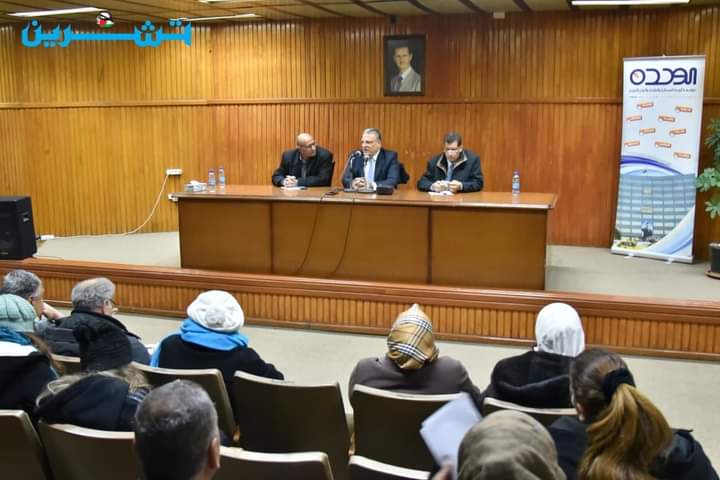
Al Wahda Establishment held a dialogue session with Minister of Agriculture, Mohamed Hassan Qatana who talked about the livestock sector which has been damaged. He said : “We lost 50% of the animal sector and we made offers to import cows. We have a plan to supply 30 thousand heads of cows. We started taking new new tracks to develop this sector. In addition to establishing fish farms in salt and freshwater”.
The Minister added “The Production costs are very high, as the price of a ton of potato seeds is 3.5 million, and a ton of fertilizer is 2 million”. The biggest problem facing the farmer in agriculture is the lack of financial resources.
Regarding the greenhouses, the Minister says that a decision was issued by the Ministry to limit the cultivation of vegetables in the coastal area only, due to its moderate climate. Only 15 percent of the houses are heated, and the rest is not heated, depending on the environment.
He emphasized the necessity of spraying greenhouses with water from the outside to help heat exchange, as well as irrigation networks to help in this, in addition to increasing heating allocations to the coastal area.” We also rehabilitated the greenhouses according to the required specifications to face the sea dragon, which is the biggest danger to the greenhouses.”
The Ministry also has prohibited the illegal cutting of wood or its transfer between governorates except for industrial purposes, and it has prohibited carbonization and the closure of unlicensed mills and forestry warehouses.
“We coordinate with organizations, federations and unions. We agreed with the UNDP in order to restore the palm oasis in the Palmyra Protectorate”.
We planted most of the irrigated areas, and this is a national right, and the farmers who couldn’t cultivate his land, the government will help him.
Finally, the Minister answered the journalists’ questions….
Syriatimes asked the Minister about the project of establishing a specialized industrial zone for agricultural industries in the Al-Ghab region
The plan is underway and we have chosen 4 areas in the Al-Ghab region to help farmers secure their agricultural requirements and reduce transportation burdens, in addition to providing job opportunities for young people.
Reported by Sanaa Hasan