
Mawwal singing tradition in Syria
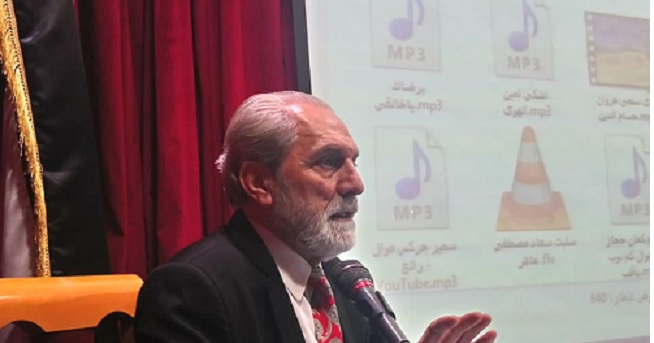
The Arab Cultural Center in Abou Rumaneh recently held a lecture by musical researcher Waddah Rajab Basha entitled “The history of the “Mawwal” in Levant and Arab World”.
The researcher started his lecture by the definition of Mawwal: (popular folklore singing poetry) saying: “the Mawwal is written poetry in classical or common Arabic chosen by singer to sing. It is a traditional and popular part of local folklore that proves the singer’s ability to sing and shows his strong and beautiful voice”.
This kind of singing started 120 years ago, when the singer used to sing Mawwal before the actual song, which can be accompanied by musical instruments, initiating by (Ya lail,Ya ein) which means (Oh eye, Oh night). There are as well references saying that Mawwal singing tradition began in Caliph Harun al-Rashid reign period.
“Although most of Arab singers have strong voices, but not all of them are able to sing Mawwal, because it is a creative kind singing. For example, the late singer Warda al-Jazaeria, despite her beautiful voice, wasn’t able to spontaneously sing Mawwal” added Waddah Rajab Basha.
 Mr. Waddah clarified:”In Syria, the Mawwal has many kinds as Ataba, Mijana, etc…. The Mawwal as a musicalpoetic form varies from region to region, and from singer to singer. Syrian prominent singers are able to perform all these difficult forms of singing, such as famous singer “Sabah Fakhri” who was able to perform various forms of Mawwal, in a very creative and exceptional way.
Mr. Waddah compared between Mawwal in Lebanon and Syria, which is performed by powerful singers, like Wadi El- Safi, Sabah and Fairouz.
Concerning Egyptian Mawwal tradition, many famous singers showed talent in Mawwal singing as late singer Fareed al-Atrash, Karem Mahmoud and Umm Kulthum, whose voice is considered the Arab world’s finest female voice.
Despite modern music wide spread among Syria and Arab countries, but the Mawwal is still considered a very traditional and popular form of Arab singing tradition.
Interviewed by: N.H.Kh