
Islamic Damascus Ceramics
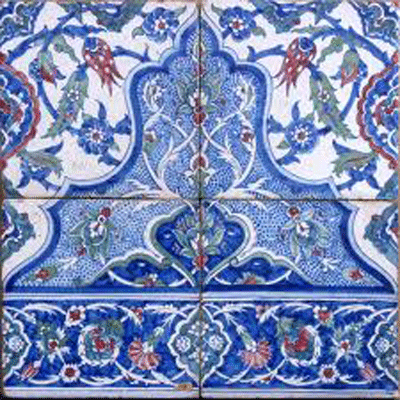
DAMASCUS, (ST) – The pottery and porcelain industry is one of the unique industries in the eastern Mediterranean region. The industry of pottery dates back to the eighth millennium BC, whereas ceramic industry goes back early to the second millennium BC.
Researcher, Mona Muezzin, in her book entitled “Islamic Damascus Ceramics”, preserved in the National Museum in Damascus, talks about her view of this industry from the thirteenth century to the eighteenth century AD.
Mrs. Muezzin gives a clear idea about the artistic, scientific and industrial activity through manufacturing the pot by hand and then dried in furnaces, followed by the installation of dyes or colors prepared of natural materials and the implementation of the decorative subject on the pot of different shapes.
The artist who decorates ceramic pots is always professional and talented. He must carry and stir the pot in one hand , however, and with the other hand holds the brush. First, he divides the pot into fields or ranges and second he expand motifs within those spaces to immerse the pottery in a textured glass and grill it again to get an earthenware.
“Pottery and porcelain industry is of great importance and inherent in archaeological sites, and helps to define the history of the site as the porcelain particularly helps define the history of Islamic sites due to the spread and diversity of porcelain widely used in medieval Islamic,” Mrs. Muezzin pointed out.
Scientists and specialists in this field provided all types of ceramic studies and identified their features and classification, Mrs. Muezzin added.
Most who have worked in this field is Dr. Arthurlin who occupied as Secretary of Victoria and Albert Museum, one of the world’s largest museums in London, in addition to his specialty in acquisition of ceramic artifacts. Damascene ceramic archaeological artifacts are unknown, even though some of them came to international museums by some dealers and collectors of antiquities, Mrs. Muezzin explained.
The writer works in her research on the preparation of a special card for each artifact which offers basic information such as the name, number, source of museum, type of ceramic and measures, indicating whether the item is complete or incomplete.
The researcher also made an inventory of all Damascene ceramic pieces, whether in the warehouse or in the museum and identified their resources and then classified them according to their types.
Sh. Kh.